





1st Edition
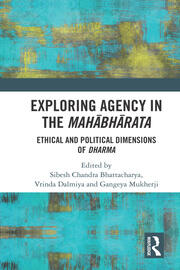
Exploring Agency in the Mahabharata Ethical and Political Dimensions of Dharma
Contributors. Foreword. Acknowledgements. Introduction: To Do I: ACTION 1. Mahabharata. Itihasa. Agency 2. In Search of Genuine Agency: A Review of Action, Freedom and Karma in the Mahābhārata 3. The Theory of Karma in the Mahābhārata 4. Karmayoga and the Vexed Moral Agent II: ACTOR 5. Complexities in the Agency for Violence: A Look at the Mahabharata 6. Irresolution and Agency: The Case of Yudhishthira 7. Can the Subhuman Speak or Act? Agency of Sagacious Serpents, Benevolent Birds, Rational Rodents, and a Mocking Mongoose in the Mahābhārata 8. Textual–Sexual Transitions: The Reification of Women in the Mahabharata 9. Ekalavya and the Possibility of Learning III: EPIC AGENCY AND RETELLINGS 10. Tagore’s Readings of the Mahabharata 11. Answerability between Lived Life and Living Text: Chronotopicity in finding Agency in the Mahabharata 12. Drona in the Ekalavya Episode in Sāralā Mahābhārata. Index
Biography
Sibesh Chandra Bhattacharya is former Professor of Ancient History, Allahabad University, India.
Vrinda Dalmiya is Professor, Philosophy Department, University of Hawai’i, Manoa, USA.
Gangeya Mukherji is presently Visiting Professor, School of Arts and Sciences, Ahmedabad University, Ahmedabad, Gujarat, India.
