





1st Edition
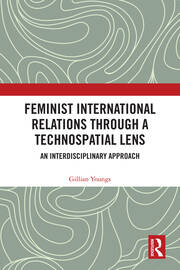
Feminist International Relations Through a Technospatial Lens An Interdisciplinary Approach
Part I. Introducing an Interdisciplinary Journey and Rationale
1. Feminist International Relations Through a Technospatial Lens: an interdisciplinary approach
Setting the scene: a long view of political economy
The technological momentum of contemporary history
Digital economy and a technosocial world
Feminism and mediated digital times
Agency and horizontal versus vertical communication
Geospatial and sociospatial hybridity
Digital empowerment: technospatial considerations
Power, empowerment and the digital self
Related Reading
Part II. Public/Private and the Geospatial/Sociospatial Nexus
2. Introduction to Part II
Feminism, spatiality and empowerment
Unseen or obfuscated areas of lived experience
Embodied experience: online and offline life
Disrupting the containment of women’s lives and identities
3. Breaking Patriarchal Bonds: Demythologizing the Public/Private
The nature of the patriarchal ‘prism’
Space and power: gender and public/private divides
From the private to the public: agency and spatiality
Conclusions: an atypical case points the way
4. Globalization, Feminism and Information Society
Introduction
Globalization and the virtual world: sightings
Digital divide and access: sites
Feminism and access to the information society: sociospatial resistances
Technology and identity restructuring
Technology and history
Horizontal versus vertical communication
Conclusion
5. Making the Pain Count: Embodied Politics in the New Age of Terror
Introduction: pain and embodied politics
Disembodied politics and the new age of terror
Disembodiment and the absence of pain as politically meaningful
Radical transformation: making pain count
Conclusion
Part III. Feminism, Technology and Agency
6. Introduction to Part III
Radical spheres of relating and knowledge-building
Feminist challenges to masculinist technological determinism
Embodied security and the information-age state
Multimedia surveillance
7. Theoretical reflections on networking in practice: The Case of Women on the Net
Introduction
WoN and networking as practice
WoN and ‘relating internationally’
Conclusion
8. Feminizing cyberspace: rethinking technoagency
Introduction
Cyberspace, boundaries and agency
Women and cyberpolitics
Cyber possibilities and development
Conclusion
9. Feminist International Relations in a High-Tech Age
The world of intelligence through a feminist lens
Intelligence and the technological world
Ontological dimensions of feminist perspectives on technology
Conclusion
Part IV. Interdisciplinary Threads and Digital Futures
10. Concluding Thoughts
Future-scoping: sociotechnical and industrial imperatives
AI as a sociotechnical wake-up call?
Multimedia and embodied reality in an AI world
AI and creeping automation
Feminism and STEM hierarchies
Index
Biography
Gillian Youngs has held a number of professorial positions, including, most recently, as a visiting professor at the University of Greenwich, UK. She has built an international scholarly reputation at the cutting edge of international relations (IR) and international political economy (IPE), focused on globalization, digital economy and feminist theory. Her research, publications and academic leadership work reflect the strong interdisciplinary traditions of IR and their relevance to diverse areas of policy, business and culture.
