





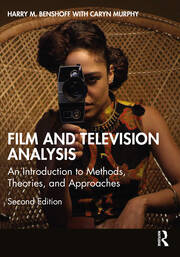
2nd Edition
Film and Television Analysis An Introduction to Methods, Theories, and Approaches
Foreword: About this book 1. Introduction to culture and cultural criticism 2. Concepts of ideology 3. Semiotics, structuralism, and beyond 4. Authorship and the auteur theory 5. Film and television genres 6. Psychoanalysis (part one): Basic concepts 7. Psychoanalysis (part two): Screen and apparatus theory 8. Feminist approaches to film and television 9. Film, television, and the postmodern 10. Cultural studies and reception 11. Audiences and fandoms 12. Beyond identity politics: Contemporary thinking on nation, race, gender, and sexuality
Biography
Harry M. Benshoff is Professor and Chair of Media Arts at the University of North Texas. His books include Monsters in the Closet: Homosexuality and the Horror Film (1997), Queer Images: A History of Gay and Lesbian Film in America (2006), Dark Shadows (2011), and the edited volume A Companion to the Horror Film (2014). His co-authored textbook America on Film: Representing Race, Class, Gender, and Sexuality at the Movies is now in its third edition.
Caryn Murphy is the Oshkosh Northwestern Endowed Professor of Liberal Arts at the University of Wisconsin Oshkosh, where she teaches in the Department of Radio-TV-Film. Her research on the politics of race and gender in media representations has appeared in Media History, the Journal of Screenwriting, the Journal of Popular Culture, the Historical Journal of Film, Radio, and Television, and edited collections including From Networks to Netflix (2018, 2022).
"This revised edition adds new material and emphasis on television and streaming shows but remains a solid and impressive introduction and compendium of critical and theoretical concepts for analyzing films, television, and assorted media forms. The text contains a remarkable number of conceptual frameworks and history of those frameworks and methods, and all in a highly readable form. The book’s key strength is its modeling of ideas and examples of analysis with openness and nuance. It remains easily scalable and adaptable to a variety of introductory and intermediate courses in film/media criticism."
Rick Worland, Southern Methodist University
