





1st Edition
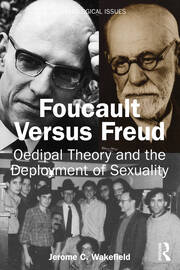
Foucault Versus Freud Oedipal Theory and the Deployment of Sexuality
1. Introduction: Foucault Versus Freud 2. The Appeal of the Oedipus Complex 3. The Masturbation Crusade 4. Surveillance, Confession, Medicalization: Foucault on the Masturbation Crusade 5.The Preservation of Victorianism: Freud's Early Theories as Extension of the Masturbation Crusade 6. Foucault on the Ease of Transition from the Masturbation Crusade to the Oedipal Theory 7. The Dangers of Fantasy: Masturbation and Incestuous Desire in the Little Hans Case 8. Foucault's Critique of Freud's Oedipal Theory: Conclusions and Implications
Biography
Jerome C. Wakefield is university professor, professor of Social Work, affiliate professor of Philosophy, associate faculty in the Center for Bioethics in the School of Global Public Health, and honorary faculty in the Psychoanalytic Association of New York Affiliated with NYU Grossman School of Medicine, at New York University.
'Mr J. Wakefield's philosophical training seemed to me very solid, it enables him to reflect upon the methodological framework of his research, and to control its conceptualization. Moreover, Mr J. Wakefield has a vast and thorough knowledge of the medical and philosophical thinking on sexuality. He enjoys a good command of the classic works on this topic, and he is really knowledgeable about contemporary research. His analytic capacities and his excellent ability to articulate his ideas make him a truly talented researcher.'
Michel Foucault, from a translated letter of reference written for the author on January 15th 1984.
