




1st Edition
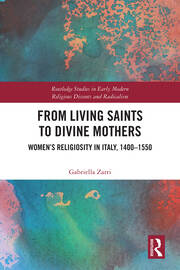
From Living Saints to Divine Mothers Women’s Religiosity in Italy, 1400–1550
Bibliographic References
Introduction: Rethinking Early 16th- Century Italian Religiosity—Living Saints, Divine Mothers, and the Agency of Women’s Spiritual Circles
Chapter 1: Living Saints: A Typology of Female Sanctity in the Early 16th Century
Chapter 2: Court Prophets in Renaissance Italy
Chapter 3: The “Mother” of Guglielmo VIII Paleologo: Maddalena Panattieri da Trino, Dominican Penitent (1443-1503)
Chapter 4: A Compendium of Wondrous Deeds of Caterina da Racconigi: Hagiography or Philosophical Treatise?
Chapter 5: A “Noble Way” to Achieve Perfection: The Blessed Elena Duglioli Dall’Olio’s Letter to Anne of Monferrato (1521)
Chapter 6: Suspicions Surrounding Women’s Spiritual Circles: The Court of Mantua and the Cult of Margherita da Russi and Gentile da Ravenna
Conclusion: Women’s Agency in Early 16th-Century Italian Religiosity: from Political Prophecy and Church Reform to the Suspicion of Spiritual Circles—Towards a European Comparative Study
Biography
Gabriella Zarri is an Italian historian and one of the leading scholars of early modern religious culture and female sanctity. She was formerly Professor of Modern History at the University of Florence. Her research explores women’s religious experience, monastic life, devotional practices, and the cultural construction of sainthood between the late Middle Ages and the early modern period. Since 2012 she has been the editor of the journal Archivio italiano per la storia della pietà. Among her best-known works are Le sante vive: Cultura e religiosità femminile nella prima età moderna and Recinti: Donne, clausura e matrimonio nella prima età moderna.
