




1st Edition
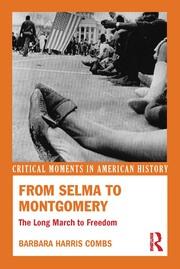
From Selma to Montgomery The Long March to Freedom
1. One Moment in Time 2. Portrait of a Nation 3. Everyday People 4. America's Bloody Sunday 5. Aftermath. Documents.
Biography
Barbara Harris Combs is Assistant Professor of Sociology and Southern Studies at the University of Mississippi.
"With admirable insight, Barbara Combs nicely frames and examines the great significance of the Selma campaign. She not only places this high point of the Civil Rights Movement into an historical context but equips us to understand the ripple effects of this ‘moment in time,’ especially as relevant to the quality of contemporary American citizenship and the franchise."
– Todd C. Shaw, author of Now is the Time! Detroit Black Politics and Grassroots Activism
"[Barbara Combs] focuses attention on the movement’s lesser known local activists, which rightfully de-centers national figures such as Martin Luther King, Jr., in the movement’s narrative. Moreover, linking the Selma-to-Montgomery March and the 1965 Voting Rights Act to contemporary discussions of the Voting Rights Act’s legacies is a timely and important scholarly intervention."
—Clarence Lang, author of Grassroots at the Gateway: Class Politics and Black Freedom Struggle in St. Louis, 1936-75
"Barbara Harris Combs offers a complex and nuanced approach to the study of the 1965 march to Montgomery, Alabama, in the context of black Americans’ freedom struggles. From Selma to Montgomery is a wonderfully crafted tool for both history and sociology undergraduate classrooms, and a scaffold from which to teach interdisciplinary methodology, thinking, and questioning.”
-David Ponton III, Rice University, USA in The Journal of Southern History
