




1st Edition
Gender and the Making of Modern Medicine in Colonial Egypt
By Hibba Abugideiri
Copyright 2010
282 Pages
by
Routledge
282 Pages
by
Routledge
282 Pages
by
Routledge
Also available as eBook on:
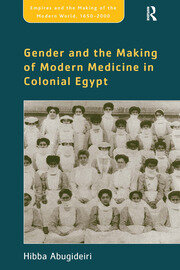
Gender and the Making of Modern Medicine in Colonial Egypt investigates the use of medicine as a 'tool of empire' to serve the state building process in Egypt by the British colonial administration. It argues that the colonial state effectively transformed Egyptian medical practice and medical knowledge in ways that were decidedly gendered. On the one hand, women medical professionals who had once... Read more
Chapter 1 Introduction; Chapter 2 Muhammad Ali’s Egypt; Chapter 3 Colonizing Egyptian Education; Chapter 4 Anglicizing State Medicine; Chapter 5 Hakimas, Dayas, and the State; Chapter 6 A Modern Medical Profession at Last; Chapter 7 Egyptian Doctors and Domestic Medicine; Chapter 8 Conclusion;
Biography
Hibba Abugideiri is an Assistant Professor of History at Villanova University, USA. She has authored many articles and contributed several chapters to edited volumes on gender and medicine as well as women in Islam.
'Hibba Abugideiri's Gender and the Making of Modern Medicine in Colonial Egypt is an informative, well-researched book detailing the changing medical field in Egypt from the time of Mehmed Ali's regime through British colonial rule (1820s-1930s)... Ultimately, with its many merits, this book is a valuable addition to growing scholarship on gender history, Egyptian history, and the history of medicine and the state in all its definitions.' Social History of Medicine 'Abugideiri offers a compelling analysis of medical professionalization, one that substantively enriches trends in the field. She situates the rise of modern medicine in Egypt in key registers of modernity: state building and population health, political tensions within the projects of empire and nation, and gender difference in the rise of modern notions of expertise.' Victorian Studies 'Gender and the Making of Modern Medicine in Colonial Egypt is a valuable analysis of how medical institution building paved the way for a syncretic indigenous medical discourse with significant implications for gender relations and for the rhetoric and mobilization of anti-colonial nationalism.' Journal of African History
