



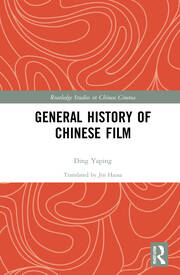

Volume 1: Introduction. 1. The Start of the Silver Journey and Experiments in Domestic Film (1896-1921). 2. The Start of Chinese National Cinema and Movie Stars (1922-1931). 3. The Reconstruction of Left-wing Films (1932-1933). 4. The Construction of Image and Spirit (1932-1937). 5. Context and Identity (1938-1941). 6. Films in the Occupied Period (1941-1949). 7. Society, Films and Responsibility (1945-1947). 8. Film of the Dramatically Changing Era (1948-1949).
Volume 2: Introduction. 1. Films Shouldering a Newborn State Power (1949-1951). 2. Imagination and a Turning Point (1952-1956). 3. In Collective Sentiments: The True Mirror (1957-1965). 4. Death of Film: A Portrait of Delirium in the Cultural Revolution Period (1966-1971). 5. The Scene of Revolution in a Special Period (1972-1974). 6. Under the Redness (1975-1976).
Volume 3: Introduction. 1. Collision of Films in a New Era (1977-1979). 2. Politics and Cultural Rhetoric (1980-1989). 3. Film, Market and Society (1990-1993). 4. The Appearance of Blockbusters (1994-1999). 5. Globalization and Imagination in Films (2000-2006). 6. The Operation and Influence of Marketization (2007-2009). 7. Image Production and the Film at the Age of Digital (2010-2012). 8. From the Era of Globalization to the Internet Age (2013-).
Biography
Ding Yaping is the Director of the Film and Television Research Institute of the Chinese National Academy of Arts. He specializes in the history of Chinese film and has published more than 20 monographs.
Jin Haina is professor of translation, film and communication studies at the Communication University of China. Her research interests include film translation, translation history, and film history.
