




1st Edition
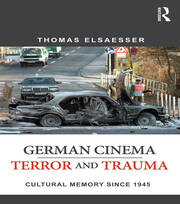
German Cinema - Terror and Trauma Cultural Memory Since 1945
Introduction: Terror and Trauma Part I: Terror, Trauma, Parapraxis 1. Terror & Trauma: Siamese Twins of the Political Discourse 2. Memory Frames and Witnessing: Burdens of Representation and Holocaust Films 3. The Poetics and Politics of Parapraxis 4. Generational Memory: The RAF Afterlife in the New Century Part II. Parapractic Poetics in German Films and Cinema 5. Rescued in Vain: Parapraxis and Deferred Action in Konrad Wolf’s Stars 6. The Persistent Resistance of Alexander Kluge 7. Retroactive Causality and the Present: Fassbinder’s The Third Generation 8. Mourning as Mimicry and Masquerade: Herbert Achternbusch’s The Last Hole 9. Re-wind after Re-play: Harun Farocki’s Respite Part III: Trauma Theory Reconsidered 10. From Mastering the Past to Managing Guilt: Holocaust Memory in the New Century 12. Postscript to Trauma Theory
Biography
Thomas Elsaesser is Professor Emeritus of Film and Television Studies at the University of Amsterdam and since 2006 Visiting Professor at Yale University. His recent books include: Weimar Cinema and After (Routledge 2000); Metropolis (BFI 2000); Studying Contemporary American Film (Hodder 2002, with Warren Buckland); European Cinema: Face to Face with Hollywood (Amsterdam University Press 2005); Film Theory: An Introduction Through the Senses (Routledge 2010, with Malte Hagener); and The Persistence of Hollywood (Routledge 2012).
"For the past thirty years or so, Thomas Elsaesser has been one of the most astute critics of European cinema and one of the foremost theorists of cinema in general. German Cinema – Terror and Trauma is a thorough analysis of how trauma, the Holocaust, memory, and guilt have continually affected German filmmakers and the lives of Germans up to the present. I am convinced that Elsaesser's work will be of utmost importance to anyone, student or general reader, who is interested in German post-war history and cinema." —Jack Zipes, Professor Emeritus, University of Minnesota
