





1st Edition
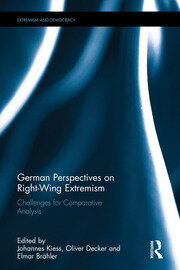
German Perspectives on Right-Wing Extremism Challenges for Comparative Analysis
Introduction: German Perspectives on Right-Wing Extremism: Challenges for Comparative Analysis
1. Comparing Right-Wing Extremist Attitudes – Lack of Research or Lack of Theory?
3. National Identity and Immigration in the Concepts of Right-Wing Extremism and Societal Security
4. A Multi-Method Approach to the Comparative Analysis of Anti-Pluralistic Politics
Part II: Comparing Right-Wing Extremism: Exemplary Case Studies
5. "Fertile Soil for Ideological Confusion"? The Extremism of the Centre
6. Fear of Social Decline and Treading on Those Below? The Role of Social Crises and Insecurities in the Emergence and the Reception of Prejudices in Austria
7. Terrorism Made in Germany: the Case of the NSU
8. Extremist or Populist? Proposing a Set of Criteria to Distinguish Right-Wing Parties in Western Europe
Biography
Johannes Kiess is Researcher in the EU FP7-project LIVEWHAT at the University of Siegen, Germany, and a phd candidate in political science.
Oliver Decker is a Member of the Faculty of Medicine at the University Leipzig, Germany, Head of the Research Unit Societal Change and Modern Medicine, and Head of the Center for the Study of Right Wing Extremism and Democracy.
Elmar Brähler was until 2013 the head of the Department of Medical Psychology and Medical Sociology at the University of Leipzig, Germany, and is responsible for a longitudinal research project monitoring the right-wing extremism attitudes in Germany (with Oliver Decker).
"This thoughtful and insightful volume provides readers with a comprehensive overview of Germanophone research on right-wing extremism, and introduces a range of epistemological and methodological debates on the topic at hand." - Katherine Williams, Cardiff University
