




1st Edition
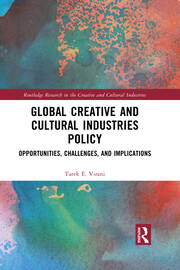
Global Creative and Cultural Industries Policy Opportunities, Challenges and Implications
1. Cultural Policy and a Creative and Cultural Industries 'Paradox' – An Introduction
2. Historicising the Creative and Cultural Industries as a Global Policy Construct
3. Definitional Tensions, the Creative and Cultural Industries, and the Implications for Policy
4. From Instruments to Ecosystems: Re-Specifying Place-Based Creative Industries Policy
5. Revolutions, Crisis, and Resilience: Implications for Creative and Cultural Organisations
6. Artificial Intelligence, Virtual and Augmented Reality, and Intellectual Property Rights
7. The Existential Threat of Climate Change, the Creative and Cultural Industries, and Cultural Policy
8. The Problem of Social Exclusion in the Creative and Cultural Industries
9. Decolonising the Creative and Cultural Industries: Beyond Diversification Towards Structural Transformation
10. The Way Forward: From Paradox to Praxis in Cultural Policy
Biography
Tarek E. Virani is Associate Professor of Creative Industries at the University of the West of England, Bristol, in the School of Arts within the College of Arts, Technology and Environment. His research spans urban and cultural policy, creative and cultural ecosystems, organisational resilience, hubs and clusters, culture-led regeneration and the international dimensions of creative work. He is recognised for shaping ecosystem approaches to the creative and cultural industries and for applied research that bridges scholarship and practice across city-regional programmes. His work foregrounds intermediaries, shared infrastructures and fair work as foundations for resilient cultural production. His publications and projects engage policymakers, cultural institutions and industry partners. He regularly contributes to public conversations on creative-economy resilience and policy design.
