



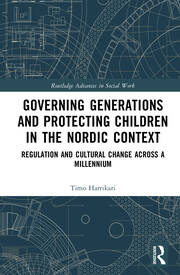
1st Edition
Governing Generations and Protecting Children in the Nordic Context Regulation and Cultural Change Across a Millennium
Section 1: Introduction 1.Framing the Longue Durée Section 2: Medieval Foundations: Kinship, Salvation, and Conditional Protection 2.Born into Order: Baptism, Lineage, and Half Wergild Section 3: Early Modern Transformations: Sin, Discipline, and Punitive Power 3.Governing Through Sin and Punishing: Disciplining, Shaming, and Capital Punishment Section 4: The Pre-Modern Reconfiguration: Law, Minority and Waiting Rooms of Adulthood 4.Recasting Childhood in Law: Criminal Law Reforms, the Erosion of Patria Potestas, and the Weak Will of ‘the Minor’ Section 5: The Rise and Consolidation of Modern Child Welfare 5.Making Children Governable: Social Defence, Protective Education and ‘Misbehaving’ Children 6.Biopolitics and the Nation: Heredity, Degeneration, and the Problem of the ‘Psychopath’ 7.Diagnosing Childhood: ‘Disturbed’ Children, ‘Maladjusted’ Youth, and Institutional Treatment 8.From Protection to Welfare: Civil Rights, Universalism, and the Reorganisation of Child Welfare Section 6: Toward Second Modernity? Rights, Risk, and Reconfiguration 9.The Abstract Child: Human Rights and the Radical Reconfiguration of Generational Relations 10.Governing Through Risk: Concern, Uncertainty, and Early Intervention 11.From Welfare to Safeguarding: Constitutionalisation and the Reprogramming of Child Welfare Section 7: Beyond Late Modernity? Crisis, Reaction, and Risk-Averse Governance 12.When System Fails: Continuous Moral Shock, Public Inquiries, and Risk-Averse Governance Section 8: Reconsidering the Longue Durée 13.How are Children Protected? Governing Generational Relations in the Longue Durée Epilogue
Biography
Timo Harrikari is Professor of Social Work at the University of Helsinki, Finland. He is the author, editor or co-editor of Towards Glocal Social Work in the Era of Compressed Modernity; Social Work and Social Change. The Changing Societal Conditions of Social Work in Time and Space; and Social Work During COVID-19: Glocal Perspectives and Implications for the Future of Social Work, all published by Routledge.
