




1st Edition
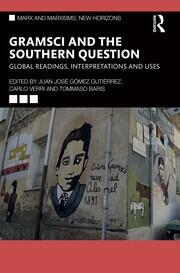
Gramsci and the Southern Question Global Readings, Interpretations and Uses
Introduction. Part One. The Southern Question in Gramsci Between History and Theory. 1. The Southern Question in Gramsci, Between Salvemini and Lenin 2. Gramsci’s Southern Question Between Hegemony and Revolution in the West 3. Antonio Gramsci: The Southern Question, Americanism and “National Life” 4. Plan and Autonomy. The Southern Question from Gramsci to Italian operaismo. Part Two. From the Southern Question to Subaltern Studies. Interdisciplinary Approaches. 5. Postcolonial Gramsci? From the Southern Question to Postcolonial Studies. 6. From the creative popular spirit to the subject of lack. Gramscian variations on subalternity and its sources. 7. School and subalternity in the thought of Antonio Gramsci. 8. Dialect, grammar and the antithetical function of the philosophy of praxis in the Prison Notebooks. 9. Aesthetics and Popular Culture in Antonio Gramsci. 10. Subalternity and Baroque Culture. A Gramscian reading of communication studies in the Global South. 11. Southern Question and Subalternization. A Gramscian analysis of power asymmetries in the European Union. Part Three. Some case studies: The “Southern Question” in Europe, Arab World and Latin America. 12. Gramsci's Southern Question in Spain. 13. The “Southern Question” in Latin America: receptions, interpretations and translations. 14. Gramsci and the Arab New Lefts: making sense of the early translations. 15. A Gramscian analytical perspective about the Arab countries. A Long Southern Question?
Biography
Juan José Gómez is Associate Professor of aesthetics and art theory at the University of Seville. He studies the relationship between art and politics, in particular modern art. He is the author of The PCI Artists: antifascism and Communism in Italian Art: 1944-1951 (2015) and Urbanismo y contraurbanismo de la Revolución Industrial a la Ciudad Global (2020) and curator of Critica, tendencia y propaganda. Textos sobre arte y comunismo (1917-1954) (2004). He has also published various articles and coordinated several book series with volumes on modern art, philosophy and the history of music.
Carlo Verri teaches contemporary history at the University of Palermo. He holds the national scientific qualification as a second-rank professor and is a member of the editorial board of Spagna contemporanea. He is a member of the scholarly committee of the Istituto Gramsci Siciliano and the Centro documentazione e ricerca Trentin-Iveser. He studies antifascism, the Resistance, World War I, the contemporary history of Sicily and Carlism. He has recently published Los carlistas en las Cortes constituyentes (1869-1971), PUZ, Zaragoza, 2023.
Tommaso Baris is associate professor of contemporary history at the University of Palermo and member of the Istituto Gramsci Siciliano and the Fondazione Antonio Gramsci. He has studied Fascism and Republican Italy. His recent works include Andreotti una biografica politica, il Mulino, 2021 and ‘La Resistenza e la nascita della Repubblica’, in Il comunismo italiano nella storia del Novecento, Viella, 2021.
