




1st Edition
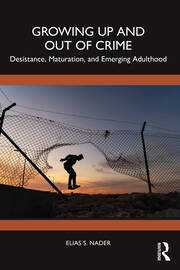
Growing Up and Out of Crime Desistance, Maturation, and Emerging Adulthood
Introduction
1. The Life Course and Emerging Adulthood Theory
2. Theorizing Identity and Maturation
3. Methodological Approach
4. Psychological Maturation
5. Relationships and Social Supports
6. Social Institutions
7. Implications for Policy and Practice
Bibliography
Biography
Elias S. Nader, PhD, is an assistant professor in the Department of Sociology and Criminology at Kent State University. He is a criminologist who studies two main topic areas: the transition to adulthood among justice-involved young people and the practices, policies, and initiatives of police departments.
"Nader has produced a top-notch study that advances the field of desistance and maturation in several important ways. Written in engaging and vivid prose, Nader sheds light on not only the importance of identity transformation in emerging adulthood but also on the mechanisms through which identity shifts. The research participants’ voices tell the story throughout, with Nader’s deft analytic hand guiding the analysis, resulting in a vital contribution to life-course criminology and one that is sure to be a staple in classrooms for years to come."
Michael Rocque, Bates College
"Nader deftly integrates theory and research to address a major problem in criminology: as many of the well-known turning points supporting desistance from offending become increasingly rare, how do today’s emerging adults form law-abiding identities? If marriage and employment spurred conformity for the generation after World War 2, what are the hooks for change that young people employ in the contemporary context? In answering these questions, Growing Up and Out of Crime advances the field of life course and developmental criminology and has important implications for crime policy."
Jamie J. Fader, Temple University College of Liberal Arts
