




1st Edition
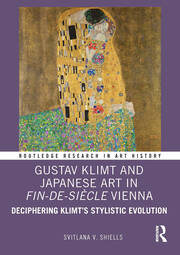
Gustav Klimt and Japanese Art in Fin-de-Siècle Vienna Deciphering Klimt’s Stylistic Evolution
Introduction
· On researching Gustav Klimt’s art
· Japonisme as a Zeitgeist in fin-de-siècle Vienna
· Literature review
· On adopting an indirect method and making informed assumptions
· Structure of the monograph
1. The Weltausstellung 1873 in Vienna as a Cultural Watershed
· Rudolf von Eitelberger and the seminal transformation of the Viennese cultural milieu
· The Weltausstellung of 1873 and the triumph of Japanese culture in Vienna
· Japanese art in the Habsburg capital: admiring, collecting, and exhibiting
2. Avatar of Austrian Modernism: The Road to the Secession
· Key biographical determinants of Klimt’s oeuvre
· Concerning Klimt’s intellectual breadth
· Emilie Flöge, Klimt’s life-long friend
· Floating toward the East
· Hugo von Hofmannsthal: The Munich Secession and the rise of discontent with the state of visual arts in Vienna
· 1897: Establishment of the Vienna Secession
3. The Theoretical Steppingstones of Klimt’s Artistic Transformation and His First Programmatic Paintings
· Reframing James Whistler’s influence on Klimt
· On the role of Franz Wickhoff and Alois Riegl in the genesis of Klimt’s style
· Greece, Japan, and the genesis of Klimt’s new style
· Pallas Athena: The unfolding of a new program
· Nuda Veritas as a conceptual roadmap: Navigating between tradition and modernity
4. The Aesthetic Dialogue Between Klimt and Hiroshige
· Hiroshige’s art in the West
· The unfolding of Klimt’s interest in Hiroshige’s art
· Hiroshige’s impact on Klimt’s programmatic works
· Hiroshige and the evolution of Klimt’s landscape painting
· Klimt’s late landscapes
· Klimt’s rendition of Adele Bloch-Bauer II: Continual metamorphosis
5. Katsushika Hokusai and Gustav Klimt
· Hokusai’s art in a European context
· Hokusai’s One Hundred Views of Mount Fuji
· The Hokusai Manga, an encyclopedia of the Japanese world
· Klimt’s Danae and Leda within the context of the Hokusai Manga
6. Japanese Erotic Prints and Klimt’s Visual Reflections
· The multifarious roles of shunga on the Viennese stage
· Klimt and his turbulent, erotically charged milieu
· Shunga and bijin-ga: two sides of the same coin
· Klimt’s revision of the nude
· Klimt’s drawings and shunga
· On the subject of water
· The garment: An independent form and tool of the segmenting-fusing mode
· Klimt and Utamaro
· Shunga and the eroticism of Klimt’s art
7. Metamorphoses: Portrait of Sonja Knips and Itō Jakuchū’s Print Golden Pheasant and Bamboo in Snow
· The critical reception of Klimt’s Portrait of Sonja Knips
· Itō Jakuchū’s print and its plausible path to Vienna
· The study drawings for the portrait
· Metamorphoses
· Background: The power of suggestion
· Further unfolding of the enigma
8. Shinto and Beyond: Klimt’s Portrait of Emilie Flöge and The Kiss
· Recasting Emilie Flöge
· Adolf Fischer’s first book, Bilder aus Japan
· Creating a mindscape: the critical revision of Portrait of Emilie Flöge
· Toward a new visual language: Visual onomatopoeia, geometry, and eroticism
· The Kiss, Klimt’s magnum opus
· Some parallels between Portrait of Emilie Flöge and The Kiss
9. The Enduring Necessity of Reaffirming of Klimt’s Artistic Principles and Commitments
· Reaffirmation of the program: Klimt’s Beethoven Frieze
· The Golden Knight
· The ode to the tendril: Klimt’s mosaics at the Stoclet Palace
10. Geometric Engagement and Symbolic Transcendence in Klimt’s Portraiture
· Klimt’s Portrait of Margaret Stonborough-Wittgenstein
· Klimt’s Portrait of Fritza Riedler
· An allegory of life: Portrait of Fräulein Lieser
11. Redressing Modernity: The Impact of the Kimono on Klimt’s Oeuvre
· The kimono, an exotic garment
· Creation via disintegration
12. Requiem: Klimt’s Series of Late Paintings
· Klimt’s late paintings: Death and Life, The Virgin, and The Bride
· The decoding of Klimt’s visual messages
· Rock as an artistic idiom
Conclusion: Klimt, the Sensei
Biography
Svitlana V. Shiells is an independent scholar. She is a former professor, who has taught at different universities in Ukraine, the United States, and Austria. She lives and works in Vienna.
"This book boldly brings together the celebrated and well-known work of Klimt with the less well-known work of Japanese erotic artists from the generations before him. Japanonisme has been intensely studied, but there remain concealed areas of interest and influence. Svitlana Shiells’ book brings one to the fore. Admirers of Klimt will find surprises at every turn."
-- Timon Screech, Professor, International Research Center for Japanese Studies, Kyoto
"Shiells’ book presents an innovative and extensive analysis of the impact of Japanese art on Klimt and the larger culture of Vienna. Her work explores rarely discussed German-language literature and exhibitions of Japanese art, as well as personal friendships, to uncover sources for Klimt’s developments in formal experimentation, decorative design, and content that ranges from kimonos to objects related to Shinto belief. This book will have a transformative effect on how viewers and scholars understand Klimt’s famous paintings in a global context."
-- Marsha Morton, Professor, Pratt Institute, New York
"My father and I have collected nearly all books on Klimt's art. Unlike anything else written previously, Svitlana Shiells’ book takes a deeper and more comprehensive approach to the art of Gustav Klimt, my great uncle. She understands his art like no one else, and her book sets a major milestone in the study of Klimt’s heritage."
-- Peter Zimpel, great nephew of Gustav Klimt, Vienna
"Klimt wrote that those who wanted to know something about him as an artist should look carefully at his pictures, indeed that everything worth knowing was there to be seen. Svitlana Shiells has done that careful looking and, in the process, uncovered what was hidden in plain sight: Klimt’s deep admiration for and indebtedness to Japanese art, from ukiyo-e prints and shunga to kimonos and Shinto shrines. Bolstering her insights with prodigious research, Shiells has produced a book that is a must-read for anyone interested in not only Klimt but Viennese modernism at large."
-- Lisa Florman, Professor, The Ohio State University
