




1st Edition
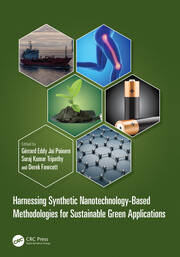
Harnessing Synthetic Nanotechnology-Based Methodologies for Sustainable Green Applications
Chapter 1: Introduction. Chapter 2: Synthesis of Molybdenum-Based Nanomaterial Additives for the Sustainable Use of high Sulphur Marine Fuels. Chapter 3: "Designing the Next Generation of Nano Catalysts for Sustainably Produced Aviation Fuels". Chapter 4: "Inorganic Membranes for Gas Separation and High Temperature Solid Oxide Cells for Producing Synthetic Fuels and Electrical Power Generation – A Review". Chapter 5: "Graphene Oxide and Reduced Graphene Oxide Additives to Improve Basin Water Evaporation Rates for Solar Still Desalination". Chapter: "Electrophoretic deposition and ink jet printing as promising fabrication routes to make flexible rechargeable cells and super capacitors. Chapter 7: "Sustainable Nanotechnology for Targeted Therapies using Cell-Encapsulated Hydrogels". Chapter 8: Wound healing and infection control using nanomaterials. Chapter 9: "Calcium carbonate micro/nanoparticles as versatile carriers for the controlled delivery of pharmaceuticals for cancer treatment, imaging, and gene therapy". Chapter 10: "Ultrasonically engineered silicon substituted nanometre scale hydroxyapatite nanoparticles for dental and bone restorative procedures: synthesis, characterization and property evaluation". Chapter 11: Nanoparticles for Agriculture. Chapter 12: "Designing Composite Nano-systems for Photocatalytic Water Treatment: Opportunity for off grid applications". Chapter 13: "Applications of carbon-based heterogeneous nanomaterials for industrial waste treatment". Chapter 14: "Microplastic Pollution and its detrimental Impact in Coastal Ecosystems and Mid-Ocean Gyres". Chapter 15: "Quantification of microplastic fibres extracted from South Beach sediments located on the South-West Coast of Western Australia: A preliminary study". Chapter 16: Genes and Nanogenomics.
Biography
Associate Professor Gerrard E. J. Poinern holds Ph.D. in Physics from Murdoch University, Western Australia. Currently he is a Senior Lecturer in Physics and Nanotechnology in the School of Engineering and Information Technology at Murdoch University. He is the Director of Murdoch Applied Nanotechnology Research Group, Murdoch University. In 2003, he discovered and pioneered the use of an inorganic nanomembrane for potential skin tissue engineering applications. He is the recipient of a Gates Foundation Global Grand Challenge Exploration Award for his work in the development of biosynthetic materials and their subsequent application in the manufacture of biomedical devices.
Dr. Suraj Tripathy is Associate Dean of the School of Chemical Technology at Kalinga Institute of Industrial Technology.
Dr. Derek Fawcett is a Research Fellow at Murdoch University, Australia.
