




1st Edition
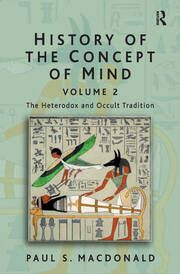
History of the Concept of Mind Volume 2: The Heterodox and Occult Tradition
By Paul S. Macdonald
Copyright 2006
478 Pages
by
Routledge
478 Pages
by
Routledge
Also available as eBook on:
Exploring the 'roads less travelled', MacDonald continues his monumental essay in the history of ideas. The history of heterodox ideas about the concept of mind takes the reader from the earliest records about human nature in Ancient Egypt, the Ancient Near East, and the Zoroastrian religion, through the secret teachings in the Hermetic and Gnostic scriptures, and into the transformation of ideas... Read more
Introduction: The Heterodox Tradition in Western Philosophy Chapter 1 Ideas About Human Nature in the Ancient Near East Chapter 2 The Ancient and Medieval Horizon of the Shamanic Soul Chapter 3 Secret Teachings about the Soul in the Post-Classical World Chapter 4 Byzantine Doctrines of Mind, Soul and Spirit Chapter 5 Christian Mystical Ideas About the Soul’s Ascent Chapter 6 Magical Ideas about the Soul from Isidore to Goethe, Chapter 7 Plurality of Dualisms and Duality of Life
Biography
Paul S. MacDonald is Lecturer in Philosophy at Murdoch University, Australia.
'...this volume is a must....There simply is nothing like it on the international publishing menu...the author has found a very appealing style of presentation, keeping the reader fascinated without sacrificing soundness of scholarship.' Horst Ruthrof, Murdoch University Perth Western Australia ’The first volume of this magisterial work concerned the history of the concept of mind within the recognised Western philosophical tradition. Here Paul Macdonald tackles the heterodox and occult tradition with the same thoroughness of scholarship and staggering erudition as was apparent in his earlier book. ... Macdonald's book can serve as an encyclopaedic point of reference to a relatively neglected aspect of the history of ideas sitting alongside his earlier work. Together these books represent a massive intellectual achievement that deserve a wide readership in the academic community while at the same time being accessible to the informed general reader.’ Scientific and Medical Network Review
