




Section 1 - Defining Accessibility
Chapter 1. Video Games are for Everyone
Chapter 2. About This Book
Chapter 3. The Social Model of Disability
Chapter 4. Addressing Inaccessibility
Chapter 5. The Types of Barriers in Games
Chapter 6. The Cycle of Exclusion
Chapter 7. The Curb Cut Effect
Section 2 - Making More Accessible Games
Chapter 8. Building More Accessible Games
Chapter 9. Nothing About Us Without Us
Chapter 10. Accessibility as a Culture
Chapter 11. Your Vision & Accessibility
Chapter 12. Audio Accessibility
Chapter 13. Motor Accessibility
Chapter 14. Cognitive Accessibility
Chapter 15. Visual Accessibility
Chapter 16. Speech Accessibility
Chapter 17. Marccomms Accessibility
Chapter 18. General Accessibility
Section 3 - Advocating for Accessibility
Chapter 19. Justifying Accessibility
Chapter 20. Making a Compelling Case
Chapter 21. Accessibility Supports Your Staff
Chapter 22. Accessibility is: Creativity, Innovation & Quality
Chapter 23. Accessibility is: Responsibility & Your Reputation
Chapter 24. Identifying an Audience
Chapter 25. Accessibility and Cost
Chapter 26. Conversations in Advocacy
Chapter 27. Practical Actions for the Champion
Chapter 28. Myths and Misconceptions
Chapter 29. The Multiplayer Excuse
Chapter 30. Closing Thoughts
Biography
Joe Kinglake is a professional Design Director with 12 years of experience in the AAA video games industry, having worked on some of the world’s biggest titles. Joe has spent the last 6 years of their career actively engaged in bringing a focus to making the industry a more inclusive, accessible place.
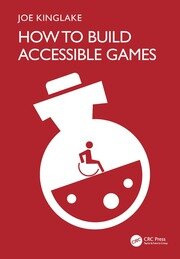
"Games accessibility made accessible: How to Build Accessible Games showcases Joe Kinglake's candor, passion, and dedication to the core belief that games should be for everyone.
By approaching the topic from basic definitions through to feature implementation, How to Build Accessible Games provides valuable insights on accessibility for all game makers, from graduates to veterans, and from micro indie studios to multinationals AAA companies.
Through their dedication to wanting everyone to get the same opportunity to play, Kinglake brings their experience as a Design Director fully to every page, laying out the issues commonly encountered when aiming to build games in more accessible ways, and then providing practical, comprehensive, and empathetic answers to assist with toppling each barrier in turn.
Whether the issue is understanding what accessibility is and its value, what types of features could be added and their impacts, or how to gain buy-in and make the vital business arguments, How to Build Accessible Games provides careful crafted and well-considered guidance to any reader.
It’s a must have for anyone making games today!" – Leon Hijazi-Killin, Balance Patch
