




1st Edition
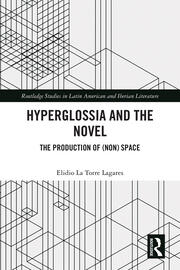
Hyperglossia and the Novel The Production of (Non) Space
From Heteroglossia to Hyperglossia: Semiotic Saturation and the Post- Narrative Condition (Introduction)
1 Hyperglossia as Epistemic Drift in Olga Tokarczuk’s Flights
2 Technofeudalism and the Semiotic Machine: Reading Paz Soldan’s Iris Through Hyperglossia
3 Mangrove as Method: On Hyperglossia, Dispositif, and Narrative Disintegration in Maryse Condé’s Crossing the Mangrove
4 Toward a Textual Topology of Excess: Hyperglossia, Non- Space, and the Crisis of Narration in Bolaño’s 2666
5 The Spiral That Explodes: Hyperglossia, Non- Space, and the Hauntology of Colonial Identity in Giannina Braschi’s United States of Banana
Conclusion: The Gloss That Refuses to End— Writing the Unfinishable
Index
Biography
Elidio La Torre Lagares is a writer, scholar, and professor in the Department of Comparative Literature at the University of Puerto Rico. He holds a PhD in Puerto Rican and Hispanic- American literature and an MFA in creative writing from the University of Texas at El Paso. His research explores hyperglossia, dispositif theory, and post- narrative textualities, with a focus on Latin American, Caribbean, and World Literature. A prolific author, his publications span poetry, fiction, and academic essays, including Wonderful Wasteland and Other Natural Disasters (2019) and Aguacerando (2025). He has presented widely at international conferences and has served as a mentor and thesis advisor in multiple graduate programs. His work bridges literary experimentation and critical theory, engaging with questions of identity, space, and excess in contemporary literature. He is also the founder of the MFA in creative writing at the University of Puerto Rico.
