




1st Edition
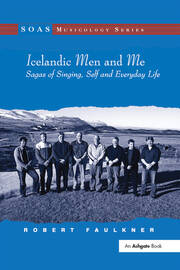
Icelandic Men and Me Sagas of Singing, Self and Everyday Life
By Robert Faulkner
Copyright 2013
252 Pages
by
Routledge
252 Pages
by
Routledge
Also available as eBook on:
A sparsely populated island in the North Atlantic recently made worldwide headlines in the Global Financial Crisis and for volcanic eruptions that caused unprecedented chaos to international air travel. Large contemporary audiences have formed very different images of Iceland through the vocal music and music videos of Björk and Sigur Rós. Just below the Arctic Circle, Icelandic men engage in... Read more
Contents: Introduction; Telling tales and setting the scene; Baldur’s Saga; Icelandic sagas and songs; Singing social connections; Songworlds: the body and vocal places; Songs, spirituality and self therapy; Singing himself: singing and the construction of gender identity; My saga; Vocal events and singing’s agency in change; Conclusions, closure and the vocal celebration of self; Gallery; Bibliogaphy, sound and film recordings; Index.
Biography
Robert Faulkner, a graduate of the Royal Academy of Music, University of Reading and University of Sheffield, is a musician, educator and researcher who lived and worked in the UK and Iceland before his present appointment at the University of Western Australia. His research interests and publications focus on interdisciplinary approaches to the contextualized study of everyday music practices and music learning.
’Faulker's Icelandic Men and Me: Sagas of Singing, Self and Everyday Life has documented the lived experience behind, above, below, and beyond the social organization of men's singing habits, whether they are comforting their child for an evening, keeping themselves company in the barn, or getting out to their choir practices despite weather, pressing chores, and limited transportation. Song glues together the sense of self, the awareness of community, and the tangibility of nation, rendering life itself as a ’musical event’’. American Book Review ’Faulkner’s methods for researching, analysing, and theorizing these topics are impressively interdisciplinary ... The insights garnered from his personal experiences as first conductor and teacher and later researcher in the local musical community give the volume a strong ethnographic feel, which is complemented by brief but engaging sections of auto-ethnography. The integration of these multidisciplinary approaches is highly effective and will probably serve as a model for others’. Music and Letters
