




1st Edition
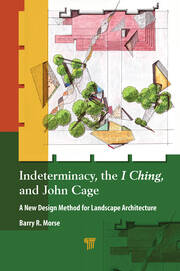
Indeterminacy, the I Ching, and John Cage A New Design Method for Landscape Architecture
Introduction
PART I THE FOUNDATIONS OF INDETERMINACY
1. Man and the Landscape
2. The Origins of Indeterminacy
PART II A SPECIFIC MODEL FOR DESIGN: JOHN CAGE’S APPROACH TO INDETERMINACY
3. A Short Biography of John Cage (1912–1992)
4. Cage’s Attitudes Regarding Indeterminacy
5. Cage’s Use of Chance Operations in Music
6. Cage’s Use of Chance Operations in Visual Art
PART III: APPLICATION OF INDETERMINACY TO A SPECIFIC LANDSCAPE
7. The University of Arizona Alumni Plaza: Two Deterministic Designs
8. The University of Arizona Plaza: A New Indeterminate Design
9. A Comparative Analysis of the Three Designs
Appendix A: Equivalency Tables
Appendix B: Hexagram Cast Tables
Appendix C: Miscellaneous Charts
Appendix D: Materials Charts
Appendix E: Comparative Evaluation Chart
Appendix F: Design Process Statistics
Appendix G: Additional Images
Appendix H: Other Modes of Indeterminacy
Biography
Barry R. Morse, a native of Maine, USA, is an unaffiliated composer, sound artist, and improviser who is interested in the fusion of diverse art forms, especially landscape design and musical composition, the two fields in which he holds graduate-level academic degrees. He is the founder and director of the world’s only improving theremin ensemble, the Etherphonic Theremin Orchestra.
