




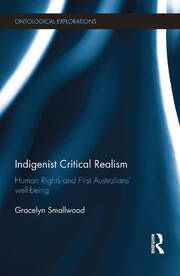
1st Edition
Indigenist Critical Realism Human Rights and First Australians’ Wellbeing
Biography
Dr Gracelyn Smallwood is an Associate Professor at James Cook University, Queensland, Australia.
Since 1968 Dr Gracelyn Smallwood continues to be an outspoken advocate for the rights of Aboriginal and Torres Strait Islander peoples. Gracelyn was the first Indigenous Australian to receive a Masters of Science-Public Health (1986) and the first Indigenous PhD graduate from the Division of Tropical Health and Medicine (2011) at James Cook University. She is an Adjunct Professor at James Cook University, Queensland, Australia. Dr Smallwood holds a number of awards including: the NAIDOC (National Aboriginal and Islander Observance Committee) Person of the Year Award (2014) and appointed a member of the Queensland Mental Health and Drug Advisory Council; the James Cook University Outstanding Alumni Award (2014); the United Nations Association of Australia Queensland Community Award-Individual (2013) in recognition of her service to Public Health, in particular to HIV-AIDS, contribution to Australian Universities and consultation to the World Health Organisation; and she received the Deadly Award for Outstanding Lifetime Achievement in Indigenous Health (2007) and was awarded an Order of Australia Medal [AM] in 1992 for her work in public health.
