





1st Edition
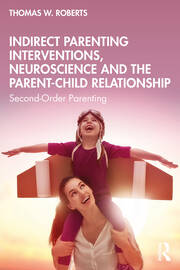
Indirect Parenting Interventions, Neuroscience and the Parent-Child Relationship Second-Order Parenting
Preface
Part I. The Basics of Parenting and Family Development
1. Introduction to Parenting Models
2. What is Second Order Parenting?
3. Systems/Dialectical Theory
4. Factors that Impact Parenting
5. Parenting and Neuroscience
Part II. Putting it All Together
6. Attachment, Systems Theory, and Neuroscience: Using Indirect, Implicit, and Paradoxical Methods
7. Modeling
8. Storytelling
9. Reframing
10. Humor
11. Confusion/Rope-a-Dope
12. Paradox
13. Postscript
14. Glossary
15. Index
Biography
Thomas W. Roberts received his Ph.D. degree from the University of Georgia in Child and Family Development. He came to San Diego State University in 1999 as Chair of the Department of Child and Family Development and was chair for nine years. He taught courses in family relationships and public policy and ethics. His research interests include divorce and remarriage, parenting, and applying neuroscience to family relationships. His current projects include how the unconscious plays the pivotal role in intimate family relationships. He has written grants on single-parenting, childhood obesity, early literacy, professional development for early childhood educators, and childhood safety.
“The systemic perspective on family dynamics adds fresh insight to existing approaches to parent education. Dr Roberts proposes that second order parenting can enhance the education process by focusing on parental attitudes and behaviors as well as techniques to alter children’s behavior. Parent-child interaction is viewed from a wide-angle systemic perspective. Transformational change in the affective climate of the family can arise from unconscious and implicit processes happening within family relationships. I am impressed with the extensive research presented in Dr Roberts’s work. Readers from the fields of psychology, child development, family relations and parent education will appreciate the thorough documentation supporting his recommendations.”
Del Hayden, Professor of Counseling (Emeritus), Western Kentucky University
"Consistent with the tradition of Carl Whitaker’s Symbolic Experiential Psychotherapy model, Dr. Thomas Roberts has written a very controversial book on second order parenting that veers away from typical parenting models in that it focuses on both explicit parenting interventions (first order change/parenting) as well as implicit parenting interventions (second order change/parenting) where the unconscious and emotional process of learning is emphasized. Using his understanding and knowledge of up-to-date neuroscience research and attachment theory, Dr. Roberts has written a cutting edge and much needed parenting book that will resonate with many parents with who want to connect creatively with their children."
- Michael Chafin, Psychotherapist and Former President of the American Association for Marriage and Family Therapy (AAMFT)
