




1st Edition
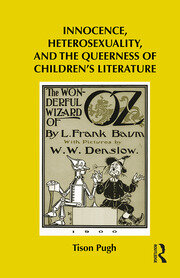
Innocence, Heterosexuality, and the Queerness of Children's Literature
Series Editor Foreword Notes on the Text Acknowledgments Introduction 1: "There lived in the Land of Oz two queerly made men": Queer Utopianism and Antisocial Eroticism in L. Frank Baum’s Oz Books 2: Eternal Childhood, Taming Tomboyism, and Equine Erotic Triangles in Laura Ingalls Wilder’s Little House Series 3: Erotic Heroism, Redemptive Teen Sexuality, and the Queer Republic of Heaven in Philip Pullman’s His Dark Materials 4: Dumbledore’s Queer Ghost: Homosexuality and Its Heterosexual Afterlives in J. K. Rowling’s Harry Potter Novels 5: "What, Then, Does Beatrice Mean?": Hermaphroditic Gender, Predatory Heterosexuality, and Promiscuous Allusions in Daniel Handler / Lemony Snicket’s A Series of Unfortunate Events 6: Excremental Eroticism, Carnivalesque Desires, and Gross Adolescence in Eoin Colfer’s Artemis Fowl 7: Masochistic Abstinence, Bug Chasing, and the Erotic Death Drive in Stephenie Meyer’s Twilight Series 8: Conclusion: Homosexuality and the End of Innocence in David Levithan’s Boy Meets Boy
Biography
Tison Pugh is Professor in the Department of English at the University of Central Florida. He is the author of Queering Medieval Genres and Sexuality and Its Queer Discontents in Middle English Literature and has published on children’s literature in such journals as Children’s Literature, Children’s Literature Association Quarterly, The Lion and the Unicorn, and Marvels and Tales.
"In shifting the focus from the queerness of same-sex relations to that of an impending heterosexuality for most children, Pugh's book makes a unique and provocative contribution to the conversation about the queer child." - Eric L. Tribunella, Children's Literature Association Quarterly
