




1st Edition
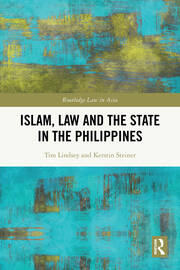
Islam, Law and the State in the Philippines
Chapter 1 Introduction: Governing the Muslim Minority — Islam, Law and Moro Resistance
Part I. The Moros and the Legacy of Colonialism
Chapter 2. Islam and the Moros under Colonial Law
Part II. Islamic Law After Independence
Chapter 3. Post-Independence Laws for Muslims and Moro Autonomy Initiatives
Part III. State Islamic Institutions
Chapter 4. Islamic Advisory Institutions: State and Non-state Actors
Chapter 5. The Shari’ah Courts
Chapter 6. Islamic Education
Chapter 7. Islamic Banking and Finance
Chapter 8. Conclusion
Biography
Tim Lindsey is Malcolm Smith Professor of Asian Law, Redmond Barry Distinguished Professor, and Director of the Centre for Indonesian Law, Islam and Society in the Law School of the University of Melbourne, where he completed PhD, LLB, B. Arts and B. Litt degrees. His more than 110 publications include Islam, Law and the State in Southeast Asia and he is an executive editor of The Australian Journal of Asian Law.
Kerstin Steiner is an Associate Professor in the Law School of La Trobe University and an Associate of the Asian Law Centre and Senior Associate of the Centre for Indonesian Law, Islam and Society, both at the University of Melbourne. She is an award-winning and widely published researcher examining the intersection of law, politics, economics, and society in Southeast Asia.
“This book is a unique and important book that is likely to quickly become the main reference point on law, Islam, and the state in the Philippines. It fills an important gap and will probably find its most receptive audience amongst those interested primarily in political science and law. It will also appeal to those working on Islamic law, comparativists and those interested in regional studies.”
Simon Butt, The University of Sydney, Australia
“This new book is superbly well presented. It will redefine and redirect the study of Islam and Islamic law in the Philippines and is likely to become the standard reference on the topic. Situated at the interface of Islamic studies, Islamic legal studies, political science, sociology and anthropology, it is a much needed reference for scholars of Islam and Islamic law in Asia and the broader Muslim world.”
Robert W. Hefner, Boston University, USA
