




1st Edition
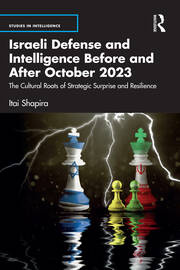
Israeli Defense and Intelligence Before and After October 2023 The Cultural Roots of Strategic Surprise and Resilience
Introduction Part I: Frameworks Chapter 1: The 2023 Israeli National Security Strategy Chapter 2: The 2023 Israeli Strategic Culture: Continuity and Change Chapter 3: The 2023 Israeli Intelligence Culture: Continuity and Change Part II: Eyes Wide Shut Chapter 4: October 7th, 2023, 06:29 AM Chapter 5: Strategic Surprise: Cultural Factors Part III: Turning the Tides Chapter 6: The Regional War in the Middle East, 2023-2024 Chapter 7: Resilience: Cultural Factors Part IV: Rise of the Phoenix Chapter 8: The 2025 Israeli National Security Strategy Chapter 9: The 2025 Israeli Strategic and Intelligence Cultures: Continuity and Change Conclusion Appendix: List of Interviewees
Biography
Itai Shapira holds a PhD from the University of Leicester, UK, and is a Brigadier General in the Israel Defense Forces (IDF) Reserves. Shapira has served for more than 25 years in the Israel Defense Intelligence (IDI). He is the author of Israeli National Intelligence Culture (2024).
‘Israel’s intelligence performance in the war that erupted on October 7 presents a distinctive interplay of profound failures and notable achievements. In this book, Shapira’s cultural approach advances a comprehensive, original, and methodologically rigorous explanation for these seemingly paradoxical outcomes.’
Uri Bar-Joseph, Haifa University, Israel
‘Shapira's timely assessment of Israel's most traumatic intelligence failure since 1973 provides a candid insider-view. He delivers the most useful case study to date of change in a national strategic culture as a result of profound external shock. Anyone hoping to project the way ahead for Israeli foreign and defense policy must read this book.’
Jeannie Johnson, Utah University, USA
'A most comprehensive study of the role of intelligence in the two-year Middle East war that began on 7 October 2023. The book traces the catastrophic failure of Israeli intelligence on that day to the intelligence community's cultural traits, including over-confidence bordering on hubris, overreliance on technology, and much else. It similarly traces Israel's remarkable recovery and the crushing blows it inflicted on both Hezbollah and Iran, facilitated by superb intelligence, to Israeli cultural traits of resilience, adaptability, and agility. A must read for every student of intelligence, strategic surprise, and war.'
Azar Gat, Tel-Aviv University, Israel
