




168 Pages
by
Routledge
168 Pages
by
Routledge
168 Pages
by
Routledge
Also available as eBook on:
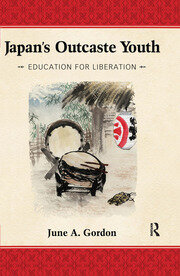
Japan's attempt to project to the world an image of solid middle-class national identity is challenged by the Burakumin, an outcaste group of indigenous Japanese citizens who have been subjugated for centuries to political, economic, and religious discrimination. In the 1960s the efforts of this group and its supporters led to a 40-year national program of economic aid and educational programs... Read more
Chapter 1 The Burakumin; Chapter 2 Taboo Research; Chapter 3 History and Politics of Liberation; Chapter 4 Access and Trust; Chapter 5 Schools as Historical Sites of Struggle; Chapter 6 Educators for Liberation; Chapter 7 Invisible and Silent: The Burakumin of Kanto; Chapter 8 A New Lens on Marginalization; Chapter 9 Diversity in the Buraku; Chapter 10 Korean Japanese and the Buraku; Chapter 11 The Effects of Changing Policies; Chapter 12 Conclusion;
Biography
June A. Gordon is an Associate Professor of international and comparative studies in the Department of Education at the University of California, Santa Cruz. She conducts research on marginalized youth in the United States, the United Kingdom, Japan, and China. Her previous books are, The Color of Teaching and Beyond the Classroom Walls. She completed a B.A. from Stanford University in East Asian studies and a Ph.D. in educational policy from the University of Washington.
“Gordon’s work is interesting and informative. She offers much-needed insight into the subject. … Japan’s Outcaste Youth adds to a growing body of new research on buraku issues, and with the voices of teachers, helps to fill a void in this field. It sets ambitious goals, contributes to our understanding of what is happening on the ground with these dedicated teachers and their students. The work would be helpful to those interested in comparative human rights education and would be a good text for an undergraduate course in education.”
—Pacific Affairs
