
1st Edition

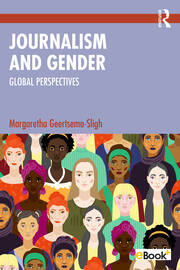
Journalism and Gender Global Perspectives

By Margaretha Geertsema-Sligh Copyright 2025
244 Pages 4 B/W Illustrations
by Routledge

244 Pages 4 B/W Illustrations
by Routledge

244 Pages 4 B/W Illustrations
by Routledge

Also available as eBook on:
Informed by global and intersectional feminist perspectives, this textbook offers a broad introduction to the role of gender in journalism and considers how women in particular are represented in the news. This book begins by introducing theoretical approaches to journalism and diversity, feminisms and intersectionality, and media sociology. With reference to more than 90 countries and an... Read more

Preface

Acknowledgments

Part 1 Theoretical Perspectives Chapter 1: Global Perspectives on Journalism and Gender

Overview

Student Learning Outcomes

The Purpose of Journalism and Gender: Global Perspectives

The Dominance of Western Scholarship

English as the Global Language

De-Westernization, Decolonization, and Southernization of Journalism Studies

Lack of Scholarship on Journalism and Gender Outside the Global North

Defining This Book’s Key Terms

Outline of Book Chapters

Conclusion

Summary

Glossary Terms and Concepts

Discussion Questions

References


Chapter 2: Journalism and Diversity in Theory and Practice

Overview

Student Learning Outcomes

The Need for Diversity in Journalism Theory

                Journalism’s Historical Connection to Democracies

                The Legacy of Four Theories of the Press

                Beyond North America and Western Europe

                Insights from the Worlds of Journalism Study

                Box: Journalism in a Nondemocratic Regime: The Case of Belarus

The Need for Diversity in Journalism Practice

                The Case for Diversity

                Box: Section J of the Beijing Declaration and Platform for Action

                Demographic Diversity of Journalists

                Newsroom Demographics

                Diversity in News Topics and Representations

Box: Coalition for Women in Journalism

Summary

Conclusion

Glossary Terms and Concepts

Discussion Questions

References

Chapter 3: Understanding Feminisms and Intersectionality

Overview

Student Learning Outcomes

What Is Feminism?

The Dominance of Western Feminism

Global Feminism

Women’s Rights as Human Rights

Transnational Feminism

Feminisms from the Global South

Box: The International Women’s Development Agency

Intersectionality

Feminist Communication and Media Theory

Application to Journalism and Gender

                A Human Rights Approach

                An Intersectional Approach

                Feminist Perspectives from the Global South

Conclusion

Summary

Glossary Terms and Concepts

Discussion Questions

References


Chapter 4: A Media Sociology Framework

Overview

Student Learning Outcomes

The Social Construction of Reality

A Media Sociology Framework

Box: Gaye Tuchman and the Symbolic Annihilation of Women

The Hierarchy of Influences Model

                Social Systems Level

                Social Institutions Level

                Organizational Level

                Media Routines Level

                Individual Level

Conclusion

Summary

Glossary Terms and Concepts

Discussion Questions

References


Part 2 A Global Approach Chapter 5: Toward a Global History of Women in Journalism

Overview

Student Learning Outcomes

Challenges of Studying the Global History of Women in Journalism

Box: The Public Sphere and the Private Sphere

Journalism as an Unacceptable Career for Women

Intersectionality and Early Women Journalists

Separate Publications for Women

Women’s Pages, Sections, and Columns

Supporting Marginalized Groups

Reasons for Women’s Entry to Journalism

Conclusion

Summary

Glossary Terms and Concepts

Discussion Questions

References


Chapter 6: Global Reports on Women and Journalism

Overview

Student Learning Outcomes

The Earliest Global Reports

                Mass Media: The Image, Role, and Societal Conditions of Women (1979)

                Unequal Opportunities: The Case of Women and the Media (1981)

                An Unfinished Story: Gender Patterns in Media Employment (1995)

Contemporary Global Reports

                The Global Media Monitoring Project (1995–2020)

                The IWMF’s Global Report on the Status of Women in the News Media (2011)

Box: The International Women’s Media Foundation

                Women and Leadership in the News Media Series (2024)

                The Missing Perspectives Report Series (2020–2022)

Conclusion

Summary

Glossary Terms and Concepts

Discussion Questions

References


Chapter 7: Worldwide Violence Against Women Reporters

Overview

Student Learning Outcomes

The Gendered Nature of Violence Against Women Reporters

Online Attacks Against Women Reporters

Box: Threats Against Women Reporters in South Africa

Sexual Harassment of Women Journalists

The Impact of Violence and Harassment on Women Reporters

Strategies for Dealing with Violence and Harassment

Conclusion

Summary

Glossary Terms and Concepts

Discussion Questions

References


Part 3 Women’s Participation in News Production Chapter 8: Gender and Newswork

Overview

Student Learning Outcomes

Newswork Is for Men

Men-Dominated Newsroom Cultures

Horizontal Job Segregation and Beat Assignments

Marriage, Motherhood, and Family Responsibilities

Women’s Responses to Men-Dominated Newsroom Cultures

The Impact of Intersectionality

Box: African Women in Media

Conclusion

Summary

Glossary Terms and Concepts

Discussion Questions

References


Chapter 9: Women Making News

Overview

Student Learning Outcomes

Women in Television Journalism

Women in Men-Dominated News Areas

                War Reporting

Box: Christiane Amanpour

                Reporting Politics

                Sports Reporting

                Photojournalism

Women in Newsroom Leadership

                The Glass Ceiling

                Reasons for Women’s Underrepresentation in Leadership Positions

                Increasing the Number of Women in Leadership

Leadership and Intersectionality

Conclusion

Summary

Glossary Terms and Concepts

Discussion Questions

References

Part 4 News Representations of Women Chapter 10: News Representations of Violence Against Women and Women in Politics

Overview

Student Learning Outcomes

News Representations of VAW

                Femicide in the News

                Rape in the News

Box: Progressive Coverage of Violence Against Women

News Representations of Women in Politics

                Women in Formal Politics

                Women in Informal Politics

Conclusion

Summary

Glossary Terms and Concepts

Discussion Questions

References

Chapter 11: News Representations of Women, War, and Terrorism

Overview

Student Learning Outcomes

Women and War

Box: How to Improve News Coverage of Women and War

Military Women and Fighters

Women Terrorists and Suicide Bombers

Women and ISIS

Women Refugees and Migrants

Box: The Clash of Civilizations

Conclusion

Summary

Glossary Terms and Concepts

Discussion Questions

References

Part 5 Toward Change Chapter 12: Gender and International Media Development

Overview

Student Learning Outcomes

Development and Communication

                Development Communication

                International Media Development

Gender and Development

                Gender Mainstreaming

                Box: Gender Mainstreaming in Global News

                Gender Transformative Approaches

Box: Gender in Media Development: The Case of Internews

Conclusion

Summary

Glossary Terms and Concepts

Discussion Questions

References

Chapter 13: Feminist Media Activism and Journalism Education

Overview

Student Learning Outcomes

Feminist Media Activism

Box: Gender Links: Challenging the Lion in Its Den

                Global Gender Media Monitoring

                Global Gender and Media Policy Advocacy

                Box: The Global Alliance on Media and Gender

Journalism Education

                Decolonizing Journalism Education

                Implementing Critical and Feminist Pedagogies

                Gender in Journalism Curricula

Conclusion

Summary

Glossary Terms and Concepts

Discussion Questions

References

Final Thoughts

Looking Back

                What You Have Learned

                Countries Included in This Book

Looking Forward

                Research Gaps

                Your Future

Discussion Questions


Appendix

Table 1: List of Countries Included by Region

Table 2: List of Countries Not Included by Region

Glossary


Biography

Margaretha Geertsema-Sligh is Professor of Journalism at Butler University in Indianapolis, USA. Born and raised in South Africa, Geertsema-Sligh obtained a doctoral degree in journalism from the University of Texas at Austin. She has studied the relationship between women and news globally for more than 20 years.

"Journalism and Gender is a timely, hugely readable, and thorough teaching gem. With a thoughtful and global approach, this textbook illuminates current and future discussions on the ever-pressing issue of how women worldwide are not treated equally in journalism and news."

Dr. Ingrid Bachmann, Pontificia Universidad Católica de Chile, Chile


"This book is an excellent resource for inclusive journalism and gender education. With a global focus, five parts address the participation and representation of women in journalism. The succinct student learning outcomes and glossary are helpful."

Dr. Pallavi Guha, Towson University, United States


"Journalism and Gender offers an invaluable examination of this topic. By foregrounding global perspectives, Geertsema-Sligh challenges Western-dominated narratives and highlights the need for more inclusive perspectives. The book is a crucial resource for those interested in understanding and advancing gender equity in journalism worldwide."

Dr. Kaitlynn Mendes, Western University, Canada

"This timely and comprehensive textbook therefore explores the intersection of gender and journalism. It also presents a nuanced exploration of how gender undergirds both the production and representation of news, revealing the systemic ways journalism perpetuates gender inequalities across diverse socio-political, cultural and professional contexts. Grounded on empirical data from 92 countries - 56 from ‘developing countries’ and 36 from ‘developed countries’ - the book challenges Western-dominated paradigms and underscores the need for a more inclusive and globally informed approach to journalism studies. Its ambitious geographical scope offers a rich comparative perspective, extending knowledge beyond the Anglo-American domain."

Dr Mercy Ette, Newcastle University
