




1st Edition
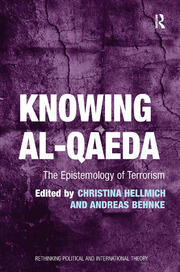
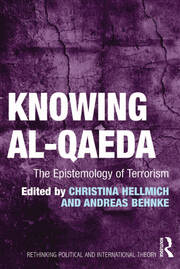
Knowing al-Qaeda The Epistemology of Terrorism
192 Pages
by
Routledge
192 Pages
by
Routledge
192 Pages
by
Routledge
Also available as eBook on:
Despite a plethora of studies devoted to it, the current understanding of al-Qaeda and the threat it poses remains vague and ambiguous. Is al-Qaeda a rigidly structured organisation, a global network of semi-independent cells, a franchise, or simply an ideology? What role did Osama bin Laden play within the group and its terrorist campaign? What does it mean to talk about the "global Salafi-jihad"... Read more
Chapter 1 Introduction: al-Qaeda and Terrorism as a Challenge to Knowledge, Andreas Behnke, Christina Hellmich; Chapter 2 ‘Here Come the Salafis’ The Framing of al-Qaeda’s Ideology within Terrorism Research, Christina Hellmich; Chapter 3 Anxieties of Global Empire, Anna M. Agathangelou; Chapter 4 Conceptualizing al-Qaeda and US Grand Strategy, Lars Berger; Chapter 5 Measuring al-Qaeda, Rashmi Singh; Chapter 6 Fear as Sovereign Strategy and the Popular Tactics of Laughter, Andreas Behnke; Chapter 7 The Friend of My Enemy: al-Qaeda, Iran and the US, Ali Parchami; Chapter 8 Terrorizing Women, Nadya Ali; Chapter 9 Afterword, Alan Cromartie;
Biography
Christina Hellmich is a lecturer in International Relations at the School of Politics and IR at the University of Reading. She is specialist in Middle East politics with a particular research interest in Political Islam, International Security and Global Health. Andreas Behnke is a lecturer in Political Theory at the School of Politics and IR at the University of Reading. His research interests include the Political Theory of International Relations, in particular Carl Schmitt, Critical Security and Terrorism Studies, and Critical Geopolitics.
'The death of Osama bin Laden has done nothing to dispel the widespread confusion over the nature and meaning of al-Qaeda. This important collection opens up new vistas in the search for a deeper understanding of how and what we know about terrorism. Interesting, incisive, and illuminating of contemporary counter-terrorist culture, this is critical social science at its very best.' Richard Jackson, University of Otago, New Zealand 'This book provides important new analytical ways of understanding the nature of al-Qaeda and 9/11 that challenges conventional wisdom in how we frame the terrorists, what they seek to achieve through violence and the pitfalls of responding to it. The book incisively and provocatively pushes new intellectual boundaries as to how we chose to analyze and respond to terrorism as a polymorpheous phenomenon in the post 9/11 period. A must-read for students of terrorism studies.' Magnus Ranstorp, Swedish National Defence College, Sweden
