




1st Edition
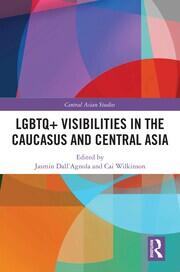
LGBTQ+ Visibilities in the Caucasus and Central Asia
Foreword
Dan Healey
Introduction: LGBTQ+ visibilities in the Caucasus and Central Asia
Cai Wilkinson and Jasmin Dall’Agnola
1. ‘Why wave the flag?’: (in)visible queer activism in authoritarian Kazakhstan and Russia
Mariya Levitanus and Polina Kislitsyna
2. Transgender activism in Kazakhstan, Kyrgyzstan and Tajikistan
Yana Kirey-Sitnikova
3. Digital misrecognitions: the violence of visibility in postsocialist Kyrgyzstan
Alexa Kurmanov and Sanjar Kurmanov
4. LGBTQ+ activism in Azerbaijan: shifting queer (in)visibility regime through power–knowledge technologies
Khayyam Namazov
5. Methods of studying LGBT experiences in the situation of invisibility: from African countries to Uzbekistan
Alexander Sasha Kondakov
6. Persuasion or polarization? LGBTQ+ attitudes among young social media users in Kazakhstan
Marika Olijar and Junda Li
7. Smartphones and public support for LGBTQ+ in Central Asia
Jasmin Dall’Agnola
8. Fieldwork within queer communities in Central Asia: a research note
Ainagul Aitbayeva
9. Politicking of Islam and LGBTQ+ discourse in Uzbekistan
Gena Cheburashka
10. ‘As long as you’re not an asshole’: insider-outsider dynamics in queer research
Elliot Napier
Epilogue: Queer In/visibility and Epistemic In/justice
Mohira Suyarkulova
Afterword: Reconsidering the Queer Political, or Against the Identitarian Liberal Turn
Tamar Shirinian
Biography
Jasmin Dall’Agnola is a Senior Postdoctoral Researcher at the University of Zurich’s Department of Communication and Media Research, Zurich, Switzerland. Her research focuses on the relationship between gender, technology, and surveillance in authoritarian societies. She is the Associate Editor for Research Notes at Central Asian Survey.
Cai Wilkinson is Associate Professor in International Relations at Deakin University, Geelong, Australia. Her research explores the interconnections of genders and sexualities with security and societal identities, including the politics of LGBT human rights and “traditional values” in Russia, Kyrgyzstan, and Eurasia more widely.
