




1st Edition
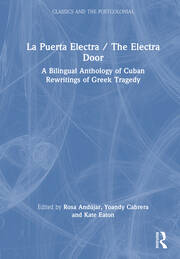
La Puerta Electra / The Electra Door A Bilingual Anthology of Cuban Rewritings of Greek Tragedy
Editors’ Acknowledgements
List of Contributors
1. Introduction: Opening the Electra Door - Rosa Andújar, Yoandy Cabrera, and Kate Eaton
2. Electra Garrigó (1948) by Virgilio Piñera, with translation by Kate Eaton
3. Medea en el Espejo / Medea in the Mirror (1960) by José Triana, with translation by Catherine Boyle
4. Los Siete contra Tebas / The Seven against Thebes (1968) by Antón Arrufat, with translation by William Gregory
5. Prometeo / Prometheus (1969) by Tomás Fernández-Travieso, with translation by Karla Rivera-Torres
6. Las Hetairas Habaneras / The Havana Hetaerae (1977) by José Corrales and Manuel Pereiras, with translation by Layla Benitez-James and Ian Farnes
7. Bacantes / Bacchae (2001) by Raquel Carrió and Flora Lauten, with translation by Rachel Toogood
8. Antígona / Antigone (2007) by Yerandy Fleites, with translation by Cristina Pérez-Díaz
9. Troya Tropical / Tropical Troy (2021) by Gleyvis Coro Montanet, with translation by John Burns
10. Appendix: Chronology of Cuban Theatre on Greco-Roman Themes - Yoandy Cabrera
Biography
Rosa Andújar is Associate Professor of Classics and Ancient Studies at Barnard College, Columbia University. She has published widely on Greek tragedy and its global reception.
Yoandy Cabrera is an Associate Professor of Spanish and Classics at Rockford University, where he also serves as Chair of the Department of Languages, Philosophy, Religion, and Cultures. He is the President of the Illinois Classical Conference.
Kate Eaton is a UK-based literary translator, theatre practitioner, and researcher. She has been a member of the Out of the Wings Ibero-American theatre collective since 2016, and has translated a wide variety of plays from Cuba, Mexico, Argentina, Uruguay, and Spain, amongst other countries, including multiple works by the renowned twentieth-century Cuban playwright Virgilio Piñera.
"This landmark bilingual anthology brings together, for the first time, modern Cuban plays that boldly reimagine Greek tragedy. It offers Anglophone readers a unique opportunity to encounter a rich, vibrant theatrical landscape where Greek myth is reclaimed, transformed, and politically charged, unsettling long‑held assumptions about who owns the classical tradition." - Vayos Liapis, Open University of Cyprus
