





1st Edition
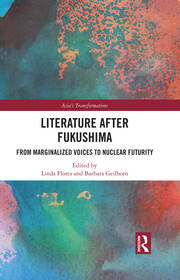
Literature After Fukushima From Marginalized Voices to Nuclear Futurity
Introduction
Linda Flores and Barbara Geilhorn
Part 1: Marginalized Voices
1. Real Eyes Realize Real Lies: Writing ‘Fukushima’ through the Child’s Gaze
Aidana Bolatbekkyzy
2. Animal Stories: Agency after Radiation
Doug Slaymaker
3. Voice and Voicelessness: Reading Vernaculars in Post-3.11 Literature
Kristina Iwata-Weickgenannt
Part 2: Spatial Acts
4. From That Day Forward: Tōhoku, 3.11, and ‘Memory Landscapes’
Linda Flores
5. The Nuclear Home and the Alien Village: The Production of Post-3.11 Space in Sakate Yōji’s Lone War
Justine Wiesinger
6. Between Trauma Processing, Emotional Healing, and Nuclear Criticism— Documentary Theater Responding to the Fukushima Disaster
Barbara Geilhorn
Part 3: Border-Crossing
7. Lost in Narration in Tawada Yōko’s The Emissary
Dan Fujiwara
8. Spoiled Meals: Immunitary and Metabolic Imaginaries in Kawakami Mieko’s ‘Dreams of Love, Etc.’ and Murata Sayaka's Convenience Store Woman
Chiara Pavone
Part 4: Nuclear Futurity
9. Humanism and the Hikari-Event: Reading Ōe with Stengers in Catastrophic Times
Margherita Long
10. Afterword: Chernobyl’s Past and Fukushima’s Remembered Future
Rachel DiNitto
Biography
Linda Flores is an Associate Professor in Modern Japanese Literature in the Faculty of Oriental Studies at the University of Oxford and the Fellow in Japanese Studies at Pembroke College, Oxford, UK.
Barbara Geilhorn is a Principal Researcher at the German Institute for Japanese Studies Tokyo (DIJ) and an Adjunct Researcher at the Tsubouchi Memorial Theatre Museum, Waseda University, Japan.
