




1st Edition
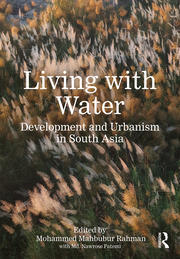
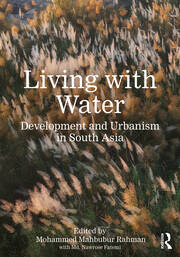
Living with Water Development and Urbanism in South Asia
List of Contributors
Introduction
PART I
Water and Urbanism
1 Population, Urbanization, and Water in South Asia: A General Prospective
Asad Aziz and Muhammad Mushahid Anwar
2 Living on Water’s Edge: Prospects of Hydrological Urbanism in Bangladesh
Iftekhar Ahmed
3 Factors Influencing Integration of Waterfront in the City through Urban Waterfront Transformation Phenomenon
Bhavna Vimawala
4 One River, Many Incarnations: Revisiting the Interplay of City, Water and Culture in the Delhi Triangle
Jyoti Pandey Sharma
5 Landscape of Land-Water Interface: Sustainable Water Sensitive Development of Eastern Periphery of Dhaka Metropolitan Area
Ayasha Siddiqua and Farida Nilufar
PART II
Water and Nature
6 The Making of a Hydro-Hazardscape: A Historical Geography of the Ravi River in Lahore
James L. Wescoat Jr.
7 Wetlands, Urbanization, and Climate Change in Colombo, Sri Lanka
Elizabeth Dean Hermann
8 Co-learning, Unlearning, and Relearning from the Experiences of the Communities ‘Living with and on Water’ in Bangladesh
Md. Nawrose Fatemi and Tahmina Rahman
9 Braided River Ecosystems of India: A Conundrum to Coexisting with Rivers That Meander
Manju Rajeev Kanchan, Vishakha Jha, and Jyoti Verma
PART III
Water and Culture
10 Waterfront Development and Disaster Management in the Vernacular Settlement of the Mountainous Region in Remakri, Bangladesh
Anindita Laz Banti
11 A Vernacular Response to River-erosion: The Traditional Houses of Munshiganj, Bangladesh
Dilruba F Shuvra
12 Yamuna and The Sacred Urban Landscape of Vrindavan, India
Amita Sinha, Nidhi Kapri, and Neha Goyal Tater
13 Delving into the Hiti System- the traditional water system of Kathmandu Valley
Padma Sunder Joshi
14 Meaning of Insularity and Isolation for Karachi’s Manora Island
Suneela Ahmed and Sarah Athar Khan
PART VI
Water and Development
15 Objectively Verifiable Indicators to Analyze the Impact of Urban Wetland Management System in The Colombo Metropolitan Region
Dilshan Remaz Ossen and Surangi Gunawardena
16 How Urban River Integrates or Disintegrates a City: A Case of Mongla Town, Bangladesh
Imon Chowdhooree, Tasfin Aziz, Md. Jubaer Rashid, and Meherab Hossain
17 On the Water’s Edge: Rural Migrants and Continuum of Livelihood Vulnerabilities in the Waterfront Informal Settlements of Khulna
Sheikh Serajul Hakim, Apurba K. Podder, and Md Toukir Hossain
18 Greywater Recycling at Household Level to Mitigate Water Scarcity Issues in Pakistan
Muhammad Mohsin Shafique and Naeem Shahzad
Index
Biography
Mohammed Mahbubur Rahman, Pro-Vice-Chancellor of Ahsanullah University, has taught in Canada, Malaysia, Bahrain, KSA, Oman, and Bangladesh, and led academic and professional entities. A Nottingham University PhD-holder, Commonwealth Scholar, and McNamara Fellow, Mohammed studied architecture and urban development. During a World Bank fellowship, he researched housing NGOs. Mohammed has published on and appeared at conferences on the global city, the waterfront, housing, liveability, traditional architecture, conservation, and the like. He has seven books on various urban development and design issues to his credit, and is a reviewer for several international journals on architecture, planning, vernacular settlements, environment, sustainable development, and construction. Mohammed edited the Handbook of Waterfront Cities and Urbanism, published by Routledge in October 2022.
Md. Nawrose Fatemi is the Head of the Department of Architecture, University of Asia Pacific, Dhaka. A Monbukagakusho Scholar, Prof. Fatemi completed his PhD research at the Urban Design and Development Studio of the Department of Global Architecture at Osaka University, Japan. His research interests include urban resilience, urban water management, canal restoration, and riverfront development. He earned his Master of Architecture degree from the Department of Architecture at Bangladesh University of Engineering and Technology. Prof. Fatemi is also actively connected as a member of the International Water Association—a UK-based nonprofit organization and knowledge hub for the water sector.
