




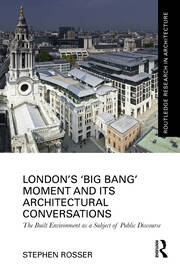
1st Edition
London's ‘Big Bang’ Moment and its Architectural Conversations The Built Environment as a Subject of Public Discourse
List of figures
Acknowledgements
1. Introduction
The architectural context
The Big Bang context
The research context
Overarching themes and case studies
2. Bold vision or destructive obsession? Peter Palumbo and the Mansion House project
The project narrative
Peter Palumbo: Inheritance and identity
The Mies scheme unveiled
Mies in a changed world
Militant conservationists
The nation’s best known architectural critic
The theology of the New Right
The Stirling version
Conclusion
3. The City’s first ‘iconic’ building: Lloyd’s of London
The project narrative
Another Pompidou?
Modernism compromised?
In dialogue with history
Building and context
Building and users
Public face, private world
The building and Lloyd’s trauma
Icon of the age
Conclusion
4. The burden of history, the challenge of context: Paternoster Square
The project narrative
Reconnecting with the past
Holford, Pevsner and their legacy
Prince Charles and his public
Style wars resumed
A test case for classicism
Conclusion
5. Big Bang City, expansionist City, Americanised City: Broadgate
The project narrative
Mega-project, enlightened developer
New offices for a new City
Private sector placemaking
Theatre of Big Bang
Globalised architecture for globalising clients
Broadgate and its neighbours
A monument to the era
Conclusion
6. Conclusion and afterword
Bibliography
Index
Biography
Stephen Rosser holds degrees in history and the history of art from the Universities of Oxford and London and completed his PhD at Birkbeck, University of London. As an independent scholar, his research interests centre principally on the subject of architectural writing.
