



1st Edition
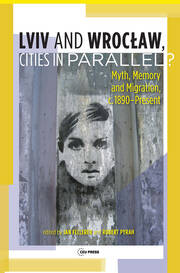
Lviv - Wroclaw, Cities in Parallel? Myth, Memory and Migration, c. 1890-Present
364 Pages
by
Central European University Press
After World War II, Europe witnessed the massive redrawing of national borders and the efforts to make the population fit those new borders. As a consequence of these forced changes, both Lviv and Wrocław went through cataclysmic changes in population and culture. Assertively Polish prewar Lwów became Soviet Lvov, and then, after 1991, it became assertively Ukrainian Lviv. Breslau, the... Read more
Introduction, A Place Called Home? Nation, Locality and the “Parallel” Polish-Ukrainian Histories of Wroc?aw and Lviv, Population Movement and the Liberal State: The Polskie Towarzystwo Emigracyjne and the Regulation of Labor Migration from Lviv’s Hinterlands, Jews in Lviv at the Turn of the 20th Century: On the Road to Modernization, Beyond National: “Posttraumatic Identity” of Disabled War Veterans in Interwar Lviv, East Meets West: Polish-German Coexistence in Lower Silesia through the Memories of Polish Expellees, 1945–1947, Tylko we Lwowie: Tango, Jazz, and Urban Entertainment in a Multi-ethnic City, Impressions of Place: Soviet Travel Writings and the Discovery of Lviv, 1939–40, Imperfect Metropolis: The Evolving Projections of Wroc?aw in Polish Feature Films, The Bu-Ba-Bu and the Reorientation of Ukrainian Culture: The Carnival City and the Palimpsestual Past, Memory, and Lack of Memory, of Others: The Image of the Jewish and the Polish Neighbor in Oral Reflections of Lviv’s Current Inhabitants, City, Memory and Identity: The Case of Wroc?aw after 1945, Contemporary Lviv: Facing the Past—Reinterpreting the Past, Building Bridges Between Breslau and Wroc?aw: A Case Study from the European Capital of Culture Initiative, 2016, Afterword: Central European Cities as Laboratories of Memory… and Oblivion—Lviv and Wroc?aw Contrasted, Index
Biography
Robert Pyrah is Research Fellow at Wolfson College, University of Oxford.
