




1st Edition
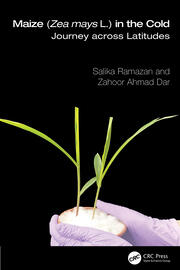
Maize (Zea mays L.) in the Cold Journey across Latitudes
1 Introduction
2 Biology of Maize
2.1. Taxonomy, Origin, and Evolution
2.2. Botanical features and Reproductive Biology
2.3. Ecological and Environmental Interactions
2.4. Maize cultivation: A Global Scenario
2.5. Maize cultivation: Indian Perspective
2.6. Biochemistry of Maize Kernel
2.7. Maize in pharmacology
3 Journey from Tropics to Temperate- An overview
4 Abiotic Stresses and Maize
4.1Drought Stress tolerance in maize: Present status and future prospects
4.2 Low Temperature Stress tolerance: Impacts and improvement
4.3 Salinity Stress: Effects and Management strategies
4.4 Heat Stress: Physiological, genetic, and molecular insights
4.5 Heavy Metals Stress: Effects on growth and yield
4.6 Impacts of Climate Change and its Mitigation Strategies
5 What is ‘Low Temperature’ for maize?
6 Adjustments of Maize to Low Temperature Stress
6.1 Morphological and Anatomical Behavior
6.2 Physiological Responses
6.2.1 Antioxidant Defense System
6.2.2 Accumulation of Osmolytes/ Biochemicals
6.2.3 Role of Plant Hormones
6.2.4 Photosynthesis and Photoinhibition
6.3 Molecular Responses
6.3.1 Genomics
6.3.2 Transcriptomics
6.3.3 Proteomics
6.3.4 Post-Transcriptional and Post-Translational modifications
7 Trends, Advances, and Improvements in Low-Temperature Tolerance of Maize
7.1 Conventional/Molecular Breeding
7.2 Transgenic/ Genetic Engineering Approaches
8 Conclusions and Future Prospects
Biography
Dr. Salika Ramazan is a plant biologist with a Master’s degree in Botany and a decade-long research focus on low temperature stress biology in maize. She has qualified multiple national-level competitive exams, including CSIR-NET JRF, ASRB-NET, and JK-SET, reflecting her academic excellence and research aptitude.
Her work combines stress physiology, proteomics, and agricultural biotechnology to uncover how maize adapts to cold-prone environments, particularly in temperate and high-altitude regions. Dr. Ramazan has published her research in reputed international journals such as BMC Plant Biology, Photosynthesis Research, Acta Physiologiae Plantarum, and Physiology and Molecular Biology of Plants. Currently, she is pursuing postdoctoral research as a WISE Fellow, supported by the Department of Science and Technology (DST), Government of India. Her ongoing research continues to bridge the gap between molecular insights and practical approaches for enhancing maize resilience under cold stress.
This book reflects her deep commitment to the advancement of maize cold stress research and her contribution to climate-resilient crop science.
Dr. Zahoor Ahmed Dar is presently working as Professor in SKUAST-K and is associated with AICRP – Maize Srinagar Centre as Incharge. He is involved in development of 27 varieties in maize released at National and State Level. He and his team are credited with developing first QPM hybrid along with first drought tolerant and first forage maize for the union territory of J&K. He has been associated with 30 externally funded projects from various funding agencies like DBT, DST,MoA, PPVFRA, UGC, NABARD, IFPRI etc. He has developed 500 inbred lines which are in various stages of selfing, 24 populations, 12 pools and 6 bi-parental populations in normal and QPM. He has deposited 90 maize accessions in the National Gene Bank at NBPGR and developed 20 Genetic Stocks for various traits; He has established heterotic groupings with contributing lines from Institute like VPKAS, Almora, IIMR, Ludhiana and CIMMYT. He has published more than 300 papers in reputed journals.
