




1st Edition
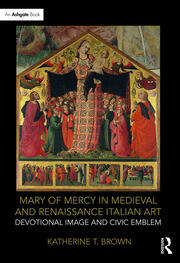
Mary of Mercy in Medieval and Renaissance Italian Art Devotional image and civic emblem
Table of Contents
List of Illustrations
Preface and Acknowledgements
A Case Study
Introduction
Chapter 1 Iconographic origins as a devotional image
- Pose and gesture
- Standing posture
- Extended arms
- Cruciform composition
- Flying or hovering pose
- Gaze, expression and demeanor
- Clothing
- Mantle and veil
- Classical literature, law and numismatics
- Medieval liturgy, law and seals
- Roman and Byzantine dress
- Roman sculpture
- Old Testament
- Apocryphal early life of Mary
- Relics of Mary’s garments in Constantinople
- Legends of visions
- Armenian Cilicia
- Cyprus
- The Crusades
- Bari
- Venice
- Veiling and unveiling the flesh of Christ
- Prayers, sermons and hymns
- Cloaks and charity in medieval hagiography
- Brooch
- Belt
- Hairstyles, crowns and halos
- Figures and objects
- Angels and saints
- Christ child
- Stars and ships
- Arrows
- Vessels
- Flowers and fruit
- Furniture and architecture
- Backgrounds and borders
- Formal elements
- Hieratic scale
- Architectonic space
- Implied light
- Shapes of supports
- Adoption by religious orders
- The Cistercians
- The Dominicans
- The Franciscans
- Related versions of Mary
- Madonna del Soccorso
- Madonna del Rosario
- Madonna del Popolo
Chapter 2 Virgin of Mercy as civic emblem for lay confraternities
- Supplicants under the cloak
- Lay confraternities and their emblems
- Architectural relief sculpture
- Gonfaloni
- Invocation against the plague
Chapter 3 Diffusion, regional styles, and adaptations
- Italian Peninsula
- The South
- Central Italy
- The North
- Western Europe
- France and England
- Slovenia, Austria and Germany
- Spain and Portugal
- Ukraine and Russia
Epilogue
Selected Bibliography
Biography
Katherine T. Brown is Associate Professor of Art History and Museum Studies at Walsh University in North Canton, Ohio.
"The [author] discusses the topic extensively and in great detail, making all kinds of connections. ... [The] book [is] rich in interesting observations and beautiful illustrations about an appealing and popular iconographic theme, spread throughout Europe and still present in our time and age."
- Analecta Bollandiana
