





1st Edition
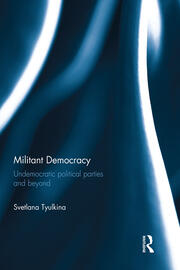
Militant Democracy Undemocratic Political Parties and Beyond
Introduction Part I. Militant Democracy: Foundations 1. Militant Democracy: Historical and Theoretical Perspectives 2. The Concept Of Militant Democracy: Problematic Or Justified? 3. The Concept Of Militant Democracy In The Practice Of Modern States Part II. Militant Democracy and Undemocratic Political Parties 4. Applying Militant Democracy: Testing the Concept in Practice, Setting Standards, and Identifying Major Challenges 5. Militant Democracy and ‘Undemocratic’ Political Parties in Europe 6. ‘Softer’ Militant Democracy Measures: Alternative Solutions from India and Israel Part III. Militant Democracy as Applied To Counter-Terrorism 7. The Banning Of Political Parties as a Response to Terrorism In Spain 8. Militant Democracy: A Guide to Australia’s Counter-Terrorism Policies? Part IV. Militant Democracy and Principle of Secularism 9. ‘Militant Secularism’ In Turkey 10. Militant Democracy and the Principle of Secularism in the Practice of the European Court Of Human Rights Conclusion
Biography
Svetlana Tyulkina is a Postdoctoral Research Fellow on the Australian Research Council Laureate Fellowship: Anti-Terror Laws and the Democratic Challenge Project in the Gilbert + Tobin Centre of Public Law, University of New South Wales, Australia.
