




1st Edition
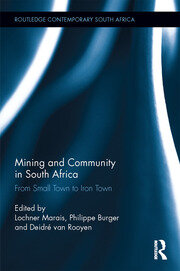
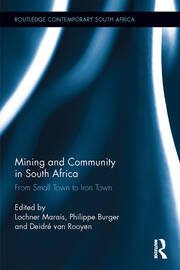
Mining and Community in South Africa From Small Town to Iron Town
Part I
1. The background to the Postmasburg study
2. The literature on mining communities and mining growth and decline
3. Migration and mine labour in South Africa
Part II: Governance, planning, the environment and power
4. The Tsassamba Committee
5. Spatial planning for Postmasburg
6. Government, mining and community relations
7. Mining and municipal finance
8. Environmental legislation, mining and ecosystems
Part III: To own or to rent?
9. Mineworker housing
10. The Khumani approach to homeownership in Postmasburg
IV: Working and doing business
11. Work, wages and welfare in Postmasburg
12. Psychological well-being on the mine
13. Businesses in Postmasburg: Tshipe e lokile (‘iron is good’) – but what about business?
Part V: Conclusion
14. The way forward for Postmasburg
Biography
Lochner Marais is Professor in Development Studies at the Centre for Development Support, University of the Free State, Bloemfontein, South Africa.
Philippe Burger is Professor and Head of the Department of Economics at the University of the Free State, Bloemfontein, South Africa.
Deidre van Rooyen is currently the Programme Director for Development Studies and a researcher in the Centre for Development Support at the University of the Free State, Bloemfontein, South Africa.
