



1st Edition
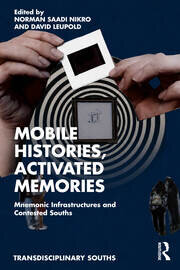
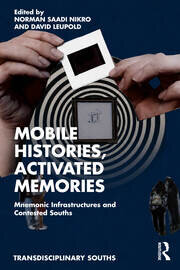
Mobile Histories, Activated Memories Mnemonic Infrastructures & Contested Souths
Introduction
Norman Saadi Nikro and David Leupold
1 Mobile Histories, Activated Memories: Chapter Outlines
Norman Saadi Nikro and David Leupold
Part One: Mobile Histories
2 The Social Life of Ta’atuf (Empathy): Storytelling and the Production of Mnemonic Infrastructures in Lebanon
Norman Saadi Nikro
3 Mobile Histories: Chempakaraman Pillai and the Construction of a Collective Role Model in Post-Colonial India
Heike Liebau
4 An ‘Immobile History’? Narrating the Cultural Memory of Bishkek’s Hip-Hop Community
Florian Coppenrath
5 Charan Narzary’s Dream for Udayachal: Contested Memorialization and the Political Memoir as an Artefact in the Bodoland Territorial Region in India
Jona Vantard
Part Two: Activated Memories
6 Laughing Away the War? Dolma Diaries (2022) and the Multivocalization of Armenian-Azerbaijani Cultural Memory
David Leupold
7 Entangled Palestinian Memories Activated through Music: Sabreen and 47Soul
Farah Aboubakr
8 Photographs as Travelling Radio- and Memory-Objects From Cold War India
Anandita Bajpai
9 The Memomusor Art Project: The ‘Trashification’ of Historical Memory in Kyrgyzstan
Lilit Dabagian
10 Genealogies of Intergenerational Memory in Lebanon: Ghassan Halwani’s Erased,____Ascent of the Invisible
Norman Saadi Nikro
Biography
Norman Saadi Nikro is an independent scholar and writer. His publications include Nafssiya: Edward Said’s Affective Phenomenology of Racism (Palgrave 2024), and Insidious Trauma in Eastern African Literatures and Cultures (co-editor, Routledge 2024).
David Leupold is a Berlin-based sociologist, scholar of memory wars, and research fellow in the ERC-funded research project REVENANT: Revivals of Empire. He is the author of Embattled Dreamlands: The Politics of Contesting Armenian, Turkish, and Kurdish Memory (2020), winner of the CESS book award, and The Death and Life of Southern Soviet Cities. Urban Futures and their Afterlives (2026). David is the former principal investigator of the DFG-funded research project Future Images of the Past (2021–2025), which he conducted at the Leibniz-Zentrum Moderner Orient.
