




1st Edition
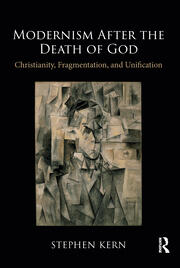
Modernism After the Death of God Christianity, Fragmentation, and Unification
Introduction: From Christian unity to modernist unification
Chapter 1. Friedrich Nietzsche: greatness, meaning, and authenticity
Chapter 2. James Joyce: wholeness, harmony, and radiance
Chapter 3. Sigmund Freud: psychoanalysis and psychosynthesis
Chapter 4. D. H. Lawrence: spontaneous-creative fullness of being
Chapter 5. André Gide: wholly available to life and love
Chapter 6. Martin Heidegger: pursuing the question of Being
Chapter 7. Virginia Woolf: creating shape out of chaos
Conclusion: A modernist ideal type
Biography
Stephen Kern is a Humanities Distinguished Professor in the Department of History at Ohio State University. His publications include The Culture of Time and Space 1880–1918 (1983); The Culture of Love: Victorians to Moderns (1992); A Cultural History of Causality: Science, Murder Novels, and Systems of Thought (2004), and The Modernist Novel: A Critical Introduction (2011).
