




360 Pages
130 B/W Illustrations
by
CRC Press
360 Pages
by
CRC Press
Also available as eBook on:
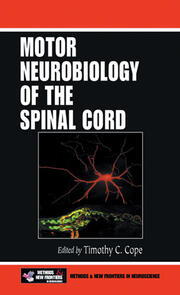
Traumatic injuries of the spinal cord continue to be the most common cause of permanent paralysis in young adults in the United States. New information has emerged on the response of spinal neurons to injury of either the spinal cord or peripheral nerves demonstrating that dendrites of injured motoneurons take on characteristics of axons. These and other new developments have helped to promote an... Read more
Optical and Genetic Approaches Toward Understanding Spinal Circuits, J. Fetcho
Spinal Motoneurons: Synaptic Inputs and Receptor Organization, R. Fyffe
5-HT Receptors and the Neuromodulatory Control of Spinal Cord Function, S. Hochman, S.M. Garraway, D. W. Machacek, and B.L. Shay
Advances in Measuring Active Dendrite Currents in Spinal Motoneurons in Vivo, C.J. Heckman and R.H. Lee
Investigating the Synaptic Control of Human Motoneurons: New Techniques, Analyses, and Insights from Animal Models, R. K. Powers and K.S. Türker
The Use of Correlational Methods to Investigate the Organization of Spinal Networks for Pattern Generation, T. Hamm, M.L. McCurdy, T.V. Trank, and V.V. Turkin
Sensory-Motor Experience During the Development of Motility in Chick Embryos, A.A. Sharp and A. Bekoff
Transformation of Descending Commands into Muscle Activity by Spinal Interneurons in Behaving Primates, S.I. Perlmutter and Y. Prut
Muscle Afferent Feedback During Human Walking, T. Sinkjær, J.B. Nielsin, M. Voigt, M. Ladoccur, M. Grey, and J.B. Andersen
Canine Motor Neuron Disease: A View from the Motor Unit, M.J. Pinter, T.C. Cope, L.C. Cork, S.L. Green, and M.M. Rich
Structural Plasticity of Motoneuron Dendrites Caused by Axotomy, P. Kenneth Rose, V. MacDermid and M. Neuber-Hess
How Nerve Injury Strengthens Ia-motoneuron Synapses, T.C. Cope, K. Seburn, and C. R. Buck
The Organization of Distributed Proprioceptive Feedback in the Chronic Spinal Cat, T.R. Nichols and T. C. Cope
Spinal Motoneurons: Synaptic Inputs and Receptor Organization, R. Fyffe
5-HT Receptors and the Neuromodulatory Control of Spinal Cord Function, S. Hochman, S.M. Garraway, D. W. Machacek, and B.L. Shay
Advances in Measuring Active Dendrite Currents in Spinal Motoneurons in Vivo, C.J. Heckman and R.H. Lee
Investigating the Synaptic Control of Human Motoneurons: New Techniques, Analyses, and Insights from Animal Models, R. K. Powers and K.S. Türker
The Use of Correlational Methods to Investigate the Organization of Spinal Networks for Pattern Generation, T. Hamm, M.L. McCurdy, T.V. Trank, and V.V. Turkin
Sensory-Motor Experience During the Development of Motility in Chick Embryos, A.A. Sharp and A. Bekoff
Transformation of Descending Commands into Muscle Activity by Spinal Interneurons in Behaving Primates, S.I. Perlmutter and Y. Prut
Muscle Afferent Feedback During Human Walking, T. Sinkjær, J.B. Nielsin, M. Voigt, M. Ladoccur, M. Grey, and J.B. Andersen
Canine Motor Neuron Disease: A View from the Motor Unit, M.J. Pinter, T.C. Cope, L.C. Cork, S.L. Green, and M.M. Rich
Structural Plasticity of Motoneuron Dendrites Caused by Axotomy, P. Kenneth Rose, V. MacDermid and M. Neuber-Hess
How Nerve Injury Strengthens Ia-motoneuron Synapses, T.C. Cope, K. Seburn, and C. R. Buck
The Organization of Distributed Proprioceptive Feedback in the Chronic Spinal Cat, T.R. Nichols and T. C. Cope
Biography
Timothy C. Cope is a professor of physiology and a member of the Neuroscience Program at Emory University in Atlanta, Georgia, where he lives with his wife, Meredith and children Russ, Audrey, and Cassie. He earned B.S. and M.S. degrees from the University of California at Los Angeles and a Ph.D. in physiology from Duke University in 1980. Following postdoctoral studies at the University of Washington and the University of California at Los Angeles from 1980–1983, he held faculty positions at the University of Texas, Southwestern Medical School and at Hahnemann University.
"…an update on the recent advances of the biology of the motor spinal cord…The authors clearly meet their objectives…a very good book…well-written…3 stars."
- Celso Agner, MSc, MD, Albany Medical Center, Doody's Notes
