




1st Edition
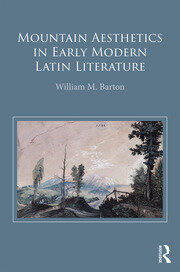
Mountain Aesthetics in Early Modern Latin Literature
Table of Contents
List of Illustrations
List of Abbreviations
Acknowledgements
Note on Neo-Latin Texts
Introduction
1. The Mountain in Latin: Literary Heritage
Josias Simmler’s De Alpibus Commentarius (1574)
The Mountain in Classical Literature
The Mountain in Classical Literature: Concluding Remarks
The Mountains of the Bible
The Mountains of the Bible: Concluding Remarks
2. Gaeographia, Prospectus, Pictura
Gessner Frames the Mountain
The Mountain in Chorography
Geography’s Rebirth in Germania
Prospectus and the Mountain in Text
Early Landscape Art and the Mountain
Latin and the Rise of the Landscape Genre
Geography and Landscape Art come together
Pliny Concludes: A View from Tuscany
3. Theologia et Philosophia Naturalis
The Disciplines and their Relationship
Natural Philosophy, Mountains of the Mind and Aesthetics
The Mountains and their Origins—l’état de question in 1561
Mountains in Genesis and Berhardus Varenius
A Smooth Primaeval Earth—Josephus Blancanus
Aesthetics of Nature in Theology: Commentaries on Genesis
The ‘Burnet Controversy’ and Mountain Aesthetics in Natural Philosophy
The ‘World Makers’, John Woodward and Dissertationes de Montibus
Scheuchzer’s Itinera Alpina and the Changed Mountain Aesthetic
4. Aesthetics of Nature: The Case of the Mountain Mentality Change
The Appreciation of Nature in Modern Philosophical Aesthetics—An Overview
Current Positions in the Aesthetics of Nature
The Natural Environmental Model
The Case of the Mountain Mentality Change
Methodological Considerations
Theism and Positive Aesthetics
The Role of Natural Science in Aesthetic Appreciation of Nature
Landscape and the Aesthetic Appreciation of Nature
Steno and Leonardo: the Tuscan Hills
Conclusions
Appendix
Annotated Bibliography
Preamble
Annotated List
Bibliography
Index
Biography
William M. Barton is a Postdoctoral Researcher at the Ludwig Boltzmann Institute for Neo-Latin Studies, Austria.
