





1st Edition
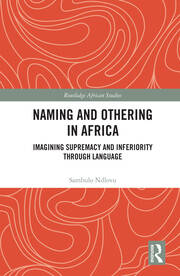
Naming and Othering in Africa Imagining Supremacy and Inferiority through Language
Chapter 1: Introduction SECTION ONE: GLOBAL, CULTURAL AND ETHNOPHAULIC NOMEN OTHERING OF AFRICA Chapter 2: Africa and global onomastic othering dichotomies Chapter 3: Names as cultural othering of Africa Chapter 4: Ethnophaulisms as crude nomen othering in African contexts SECTION TWO: SELFING AND OTHERING IN COLONIAL AND DE-COLONIAL ONOMASTICS IN AFRICA Chapter 5: Umlungu/Mzungu/Oborofo decoloniality and coloniality nuances Chapter 6: Onomastic attestations of coloniality in Africa Chapter 7: Colonial othering of African anthroponymy SECTION THREE: NAMES AS EXHIBITS OF GENDERED, DISABLIST, EXCLUSION AND SEXIST SUBALTERNITIES IN AFRICAN CONTEXTS Chapter 8: The woman other in African names and naming Chapter 9: Disablist, homophobic and sexist nomen othering in Africa Chapter 10: Socio-political onomastic exclusions in Africa Chapter 11: Conclusions and recommendations
Biography
Sambulo Ndlovu is a Humbolt Research Fellow at the Institut fur Ethnologie und Afrikanstudien at Johannes Gutenberg-Universitat, Germany and a Professor at Great Zimbabwe University.
As much of his material is from southern Africa, notably his home country Zimbabwe, and to a lesser extent South Africa, onomasticians from this part of the world will take delight in seeing something that they already know looked at with a fresh critical lens, and fitted within the single theme of othering. To those from other parts of the world, Ndlovu’s material and the way he has interpreted it, will be an eye-opener. His work is likely to become a standard text on this aspect of naming.
Adrian Koopman, University of KwaZulu-Natal, Pietermaritzburg, South Africa
