




1st Edition
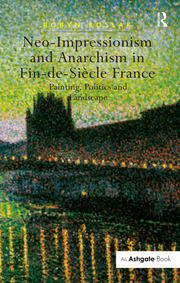
Neo-Impressionism and Anarchism in Fin-de-Siècle France Painting, Politics and Landscape
Biography
Robyn Roslak is Associate Professor of Art History at the University of Minnesota, Duluth, USA.
'... a brilliant and compelling contribution to art history and anarchist studies. Traversing the fields of art history, political science, history, ecology, and geography, Roslak has effectively rewritten the history of one of the 19th-century’s most important art movements.' Allan Antliff, University of Victoria, Canada
’Incorporating theories of cultural geography and tourism studies, unearthing little-discussed primary material, and presenting tightly unified argument, Robyn Roslak's Neo-Impressionism and Anarchism in Fin-de-Siècle France is essential reading for any scholar of Neo-Impressionism.’ Oxford Art Journal
’Robyn Roslak’s book is a welcome and illuminating study, adding to the still somewhat thin literature on neo-Impressionism.’ Art History
'... [a] ground-breaking study. ... Roslak’s book constitutes the first synthetic study of Neo-Impressionism to consider the anarchist import of this movement, free of the distorting lens of traditional Marxism.' H-France
