




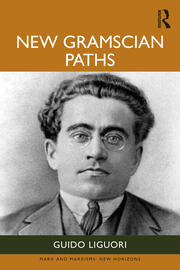
Preface. 1. From the October Revolution to the Revolution of the Concept of Revolution 2. “L’Ordine Nuovo” and Council Democracy 3. The “Discordant Harmony” between Gramsci and Luxemburg: A Reconsideration 4. Gramsci and the “Livorno Question” 5. A Strange Interview with Lenin 6. The Peasant Question and the Southern Question in Gramsci as Theorist and Leader 7. Conceptions of Subalterns and Subalternity in Gramsci 8. Machiavelli, Gramsci and the Conception of a New “Manifesto” 9. Lenin, Gramsci and the Masses-Party Dialectic
Biography
Guido Liguori is President of the International Gramsci Society. He taught history of contemporary political thought at the University of Calabria, Italy.
Liguori’s new book provides a brilliant analysis of Gramsci dealing mainly (but not exclusively) with his pre-prison writings from his espousal of the Russian Revolution, his enthusiasm for the Workers’ Councils, to the founding of the Italian Communist Party. All those interested in Gramsci’s politics should read this essential book.
Donald Sassoon, Emeritus Professor of Comparative European History, Queen Mary University of London.
This remarkable book by one of Gramsci's most attentive readers opens new pathways for exploring the enduring power of the Italian revolutionary Communist's thought to illuminate key dimensions of the history of modern politics, society and culture. Obligatory reading for all those struggling for a "New Order."
Peter D. Thomas, Professor of the History of Political Thought, Brunel University of London.
With a scrupulous use of primary sources, Guido Liguori authoritatively inserts Gramsci into the revolutionary national and international debates current in the 1920s, showing how his positions, at times with their contradictions, develop towards the mature ones of the prison years.
Derek Boothman, co-editor of International Gramsci Journal and Professor, University of Bologna.
Guido Liguori presents a chronological and conceptual unfolding of Gramsci’s political thought from his work as a journalist, activist, and organizer to his work as a political party leader and political theorist. The book synthesizes the advancements in Gramscian studies, providing new insights into Gramsci’s life and thought.
Marcus E. Green, Professor in Political Science, Pasadena City College.
