





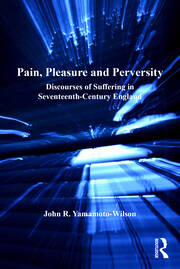
1st Edition
Pain, Pleasure and Perversity Discourses of Suffering in Seventeenth-Century England
By John R. Yamamoto-Wilson
Copyright 2013
296 Pages
by
Routledge
296 Pages
by
Routledge
296 Pages
by
Routledge
Also available as eBook on:
Luther’s 95 Theses begin and end with the concept of suffering, and the question of why a benevolent God allows his creations to suffer remains one of the central issues of religious thought. In order to chart the processes by which religious discourse relating to pain and suffering became marginalized during the period from the Renaissance to the end of the seventeenth century, this book examines... Read more
Contents: Introduction; Part I The Suffering Self: Constructs of suffering in 17th-century England; Suffering and sexuality in Catholic hagiography; Polemic, pornography and romanticism: the subversion of catholic asceticism. Part II The Suffering of Others: Cruelty and compassion; The spectacle of suffering. Part III Suffering and Gender: The sexual politics of suffering; The erotics of suffering and cruelty; The emergence of the dominatrix; Bibliography of works cited; Index.
Biography
John R. Yamamoto-Wilson is a retired Professor of the Department of English Literature at Sophia University, Tokyo. He has written extensively on issues relating to early modern translations of Catholic literature and the continuance of Catholic culture in post-Reformation England.
'Pain, Pleasure and Perversity is a compelling piece of scholarship that ambitiously analyzes multiple discourses around pain, pleasure, and power ... The book's lucid treatment of its subject and efforts to provide a nuanced account of seventeenth-century suffering are to be commended and make it good reading for students and scholars of religious studies, gender studies, and early modern studies in general.' Sixteenth Century Journal Volume ’This book adds considerably to our understanding of early modern thinking about pain and suffering. It has been argued elsewhere that we should not ignore contemporary medical understandings about how pain could incite pleasure, and hence that later conceptualizations of sadism and masochism are inappropriately applied to practices and behaviours in the early modern period. Yamamoto-Wilson’s book reminds us that the contemporary religious context was hugely important in shaping changing ideas about pain and suffering, and shows how post-Reformation thinking contributed to shifting them into the realm of sexual perversity.’ Theology and Sexuality
