





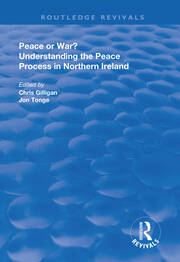
1st Edition
Peace or War? Understanding the Peace Process in Northern Ireland
Part 1. Introduction and Overview. 1. Introduction. Chris Gilligan and Jon Tonge. 2. The Origins and Development of the Peace Process. Jon Tonge. 3. Peace or Pacification Process? A Brief Critique of the Peace Process. Chris Gilligan. Part 2. Political Perspectives. 4. Divided Loyalists, Divided Loyalties: Conflict and Continuities in Contemporary Unionist Ideology. James White McAuley. 5. Unity in Diversity? The SDLP and the Peace Process. Mark McGovern. 6. From the Centre to the Margins: the Slow Death of Irish Republicanism. Part 3. Issues in the Peace Process. 7. Cross-Border Cooperation and the Peace Process. Alan Greer. 8. Security Strategies in Northern Ireland: Consolidation or Reform? Paddy Hillyard. 9. Education: A Panacea for our Sectarian Ills? Kevin Rooney. 10. The Economics of the Peace Process. Pete Shirlow. 11. The Northern Ireland Peace Process: A Gender Issue? Rachel Ward. Part 4. Conclusion. 12. Conclusion. Chris Gilligan and Jon Tonge.
Biography
Gilligan, Chris | Tonge, Jonathan
’...makes an important contribution to current debates around the peace process and identifies the key themes and trends.’ Irish Studies Review ’One of the essential difficulties arising from the situation in Northern Ireland in recent years has been the willingness of many participants to either employ ambiguous language or to adopt seemingly contradictory positions. Several of the best sections of this volume are particularly strong on highlighting and analysing instances of such obfuscation.’ Political Studies
