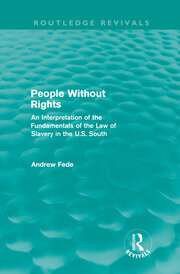
First published in September 1992, the book traces the nature and development of the fundamental legal relationships among slaves, masters, and third parties. It shows how the colonial and antebellum Southern judges and legislators accommodated slavery’s social relationships into the common law, and how slave law evolved in different states over time in response to social political, economic, and...
Read moreFirst published in September 1992, the book traces the nature and development of the fundamental legal relationships among slaves, masters, and third parties. It shows how the colonial and antebellum Southern judges and legislators accommodated slavery’s social relationships into the common law, and how slave law evolved in different states over time in response to social political, economic, and intellectual developments.
The book states that the law of slavery in the US South treated slaves both as people and property. It reconciles this apparent contradiction by demonstrating that slaves were defined in the law as items of human property without any legal rights. When the lawmakers recognized slaves as people, they burdened slaves with added legal duties and disabilities. This epitomized in legal terms slavery’s oppressive social relationships. The book also illustrates how cases in which the lawmakers recognized slaves as people legitimized slavery’s inhumanity. References in the law to the legal humanity of people held as slaves are shown to be rhetorical devices and cruel ironies that regulated the relative rights of the slaves’ owners and other free people that were embodied in people held as slaves. Thus, it is argued that it never makes sense to think of slave legal rights. This was so even when the lawmakers regulated the individual masters’ rights to treat their slaves as they wished. These regulations advanced policies that the lawmakers perceived to be in the public interest within the context of a slave society.
Read less