





1st Edition
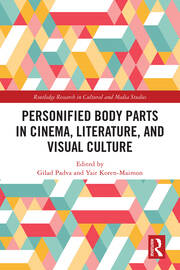
Personified Body Parts in Cinema, Literature, and Visual Culture
Introduction: Personified Body Parts and Eccentric Organs with a Spectacularly Quirky Mind of Their Own
Part I Erotically Charged Body Parts and Personified Sex Organs\
1. The Erotically Charged, Horrible Hands of Orlac: A Trans Masculine Attunement
Chris Straayer
2. Salvador Dalí’s a tergo: Sublime Buttocks and Divine Anality
Daniel Holcombe
3. Bodies without Organs in Bertrand Mandico's Cinema: Exploring Sexuality and Desire in a Post-gender World
Edoardo Pelligra
4. The Animated Cock: Carnivals, Cannibals, and Personified White Phalluses in Tarzoon: Shame of the Jungle
Gilad Padva
Part II Amputated Minds of Their Own
5. "We Are Our Brains": Disembodied Brain Films in 1950s Cold War America
David Pierson
6. (Dis)embodied Heads and Gender Subversion in Kurahashi Yumiko's Bizarre Little Stories
Irit Weinberg
7. Off with Her Head: Renaissance Queens, Medusa, and the Threat of the Female Head
Yafit Shachar
Part III Disembodied Consciousness and Corporeal Souls
8. Philomela's Tongue
Edmund P. Cueva
9. Threatening Memories: The Consciousness of the Disembodied Hand
C. Blake Evernden
10. "What's in a Body Part?" Personified Body Parts in the Grimm Brothers' Fairytale "The Three Surgeons"
Nadav Almog
Part IV Self-Personification of One's Own Body Parts
11. "It's My Nose That Has Run Away from Me": Dissociative Identity Disorder and a Struggle to Recover the Potential Space in Gogol's Story "The Nose"
Yair Koren-Maimon
12. Bodily Synecdoche: Violence of Rhetoric and the Dismembered Body
Elana Gomel
Part V Autonomous Eyes and Embodied Surveillance
13. The Autonomous Eye in Alfred Hitchcock's The Blind Man
Hugh Davis
14. "'Bli Ayin Ha'Ra!" (May the Evil Eye Not Affect You): The Autonomous Eye as A Personification of Evil in Judaism
Avi Siksik
15. The Eye and the Vagina as Windows of the Imagination: Pan's Labyrinth
José Maurício Saldanha Alvarez
Biography
Gilad Padva is a scholar and lecturer in cultural studies, film studies, men's studies and queer theory. He is the author of Straight Skin, Gay Masks, and Pretending to Be Gay on Screen (2020) and Queer Nostalgia in Cinema and Pop Culture (2014). He is the co-editor of Leisure and Cultural Change in Israeli Society (2020), Intimate Relationships in Cinema, Literature and Visual Culture (2017), and Sensational Pleasures in Cinema, Literature and Visual Culture: The Phallic Eye (2014). He is currently an independent scholar and lecturer.
Yair Koren-Maimon is the Chair of the Department of Literature and a senior lecturer at Gordon College of Education in Haifa, Israel. His main research interests are multidisciplinary literature studies, psychology, gender studies and film studies. He is the author of Therapist-Patients Relations in the Literature of Shmuel Yosef Agnon [in Hebrew] (2015) and the co-editor of Representations: Reality, Imitation, and Imagination—Critical Studies [in Hebrew] (2020).
